
Hybrid Heat Pump vs. Power-Vent Gas Water Heater: Florida Guide
Should you replace a natural gas power-vent water heater with a hybrid electric heat-pump water heater? Water Heating Experts completed this type of conversion at a home in Evergrene, Palm Beach Gardens, Florida. The homeowner changed from a power-vent gas storage tank to a hybrid electric storage heater. This article preserves the original before-and-after job photographs while comparing the installation requirements, operating costs, noise and hot-water delivery of the two systems.
Neither technology wins in every home. A heat-pump tank may be attractive when a warm garage has sufficient air space and the right electrical service; a power-vent gas tank can be a strong choice when a home already has suitable gas piping and venting. The decision should start with the actual equipment and property.
Real WHE job: replacing a power-vent gas heater with a hybrid in Evergrene
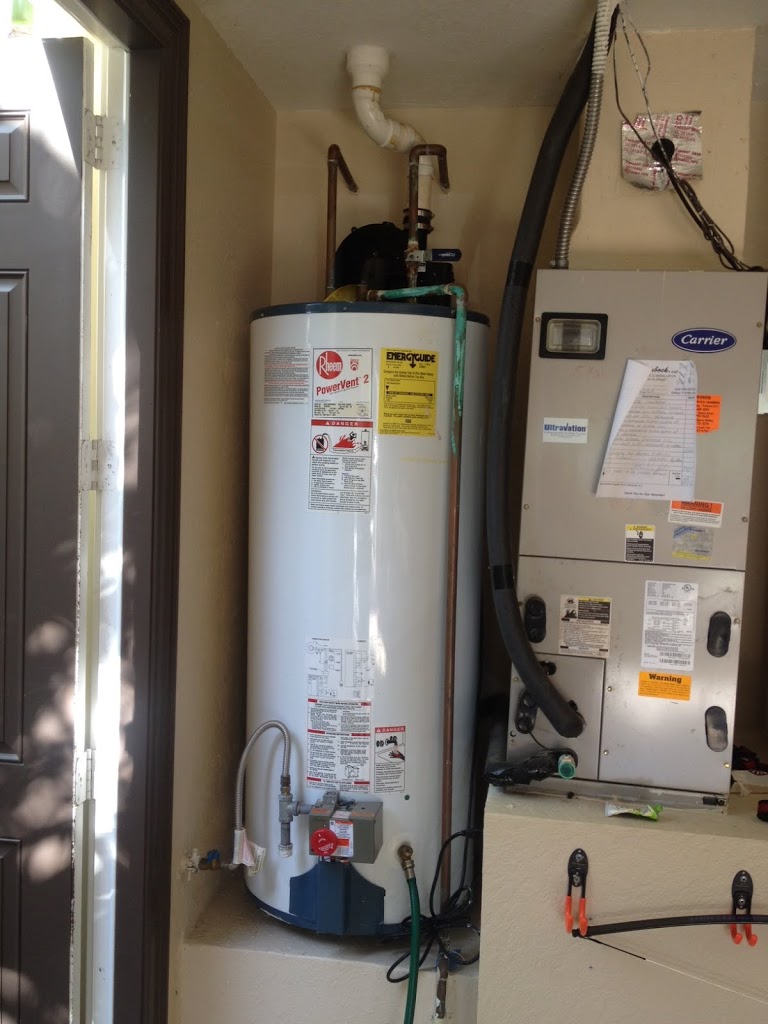
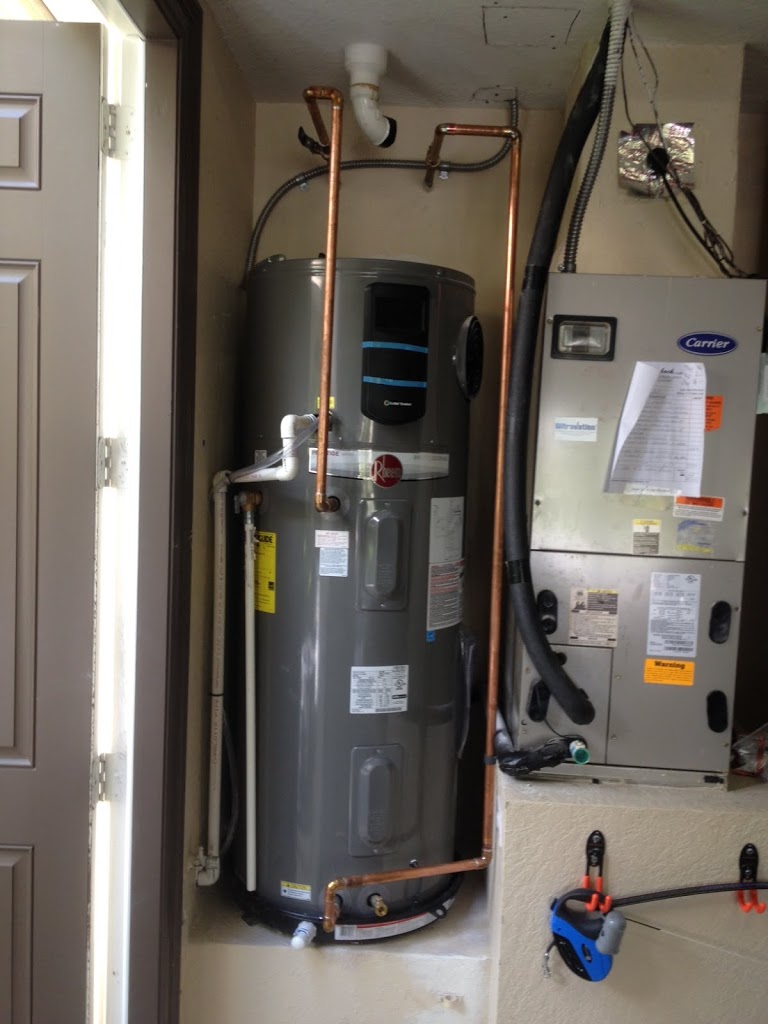
The original WHE job notes describe a change from an existing natural gas power-vent heater to a hybrid electric heater. The homeowner reported appreciating less noticeable equipment noise and cooler air in the garage. Those observations describe this historical installation; they are not manufacturer laboratory test results, universal sound ratings or guaranteed savings for a new installation.
Hybrid electric vs. power-vent gas water heater: the practical differences
| Comparison | Hybrid electric heat-pump tank | Power-vent gas storage tank |
|---|---|---|
| Energy source | Electricity; heat pump transfers heat from nearby air, with backup resistance elements on many models | Natural gas or propane, as specified; gas burner heats stored water |
| Venting | No fuel-burning flue; needs intake/discharge airflow around the heat pump or approved air ducting | Combustion exhaust must be vented outdoors using the exact model’s approved power-vent system |
| Electrical needs | Many models use a dedicated 240-volt circuit; some specialized 120-volt models exist | Blower and controls generally need an electrical supply, often a 120-volt outlet; gas service also required |
| Drainage and space | Needs condensate drainage, appropriate surrounding air and service clearance | Requires proper gas supply, combustion air, vent routing, termination and access |
| Hot-water delivery | Tank capacity, first-hour rating and selected heating mode affect recovery | Tank capacity, burner input and first-hour rating affect recovery |
| Operating cost | Depends on model efficiency, electric rates, usage and room conditions | Depends on gas prices, model efficiency, burner input and usage |
| Sound and room effects | Fan and compressor make noise; heat-pump operation cools and can dry surrounding air | Blower makes noise while venting; combustion gases are exhausted as specified |
These are equipment categories, not identical models. Compare manufacturer first-hour ratings, Uniform Energy Factor (UEF), exact fuel/voltage options and actual installed cost before drawing conclusions. A lower electric bill alone does not establish a lower total energy cost if the home previously heated water with gas.
What is a power-vent gas water heater?
A power-vent gas water heater is a gas-fired storage tank with a powered blower that carries combustion exhaust through an approved venting system to the outside. Unlike a typical natural-draft atmospheric heater, power venting allows different termination and routing arrangements. The blower requires electricity, and a loss of power may prevent normal burner operation. A.O. Smith explains atmospheric and power-vent systems.
Power vent does not mean tankless. It describes how a gas-fired water heater exhausts combustion products. Gas supply, combustion air, vent material, vent length and termination must all match the exact model and the manufacturer’s instructions. No appliance should be described as universally quieter, safer or more efficient simply because it has a particular venting arrangement.
Why a hybrid water heater can work well in a Florida garage
A hybrid heat-pump water heater collects heat from surrounding air and transfers it into stored water. Many models combine this with backup electric resistance heating. A warm garage may offer useful source heat and convenient service access. Heat-pump operation also produces cooler discharge air, which some homeowners enjoy in their garages. However, the effect depends on the garage’s size, ventilation, temperature and the heater’s operation; it does not substitute for air conditioning.
The exact hybrid model needs enough usable room air or manufacturer-approved air ducting, proper intake/discharge clearances and condensate drainage. ENERGY STAR notes that many manufacturer configurations require around 450–700 cubic feet of free air space, but this is not one universal specification. ENERGY STAR’s installation design considerations emphasize the exact manufacturer guide.
What does it take to convert from power-vent gas to a hybrid?
Changing energy sources is not a simple like-for-like tank swap. WHE evaluates the following before recommending a conversion:
- Electrical supply: verify the actual hybrid’s rated voltage, breaker, circuit size and permitted wiring. Many integrated hybrids use 240 volts, but some product families offer different configurations. Qualified electrical work may be required.
- Gas piping and exhaust: correctly decommission the old gas supply connection and approved vent system in accordance with the fuel-gas code and manufacturer requirements. Gas piping and vent work are for qualified trades, not a do-it-yourself conversion.
- Garage location and access: check tank height and weight, safe removal path, adequate ventilation, compressor/fan clearance, noise and access to the air filter.
- Condensate: provide a suitable drain or condensate pump; a hybrid creates water condensate even though it does not produce fuel-combustion exhaust.
- Water connections: inspect shutoff valves, water pressure, thermal expansion control, T&P discharge, drain pan and any needed leak-alert or drain improvements. We routinely use rigid copper with approved press connections where appropriate, but follow the specific equipment instructions.
- Demand and recovery: compare the actual first-hour hot-water rating and heating modes with simultaneous showers, large tubs and other peak demands rather than choosing only by tank gallons.
For a garage installation, do not assume an old “18-inch platform” rule applies—or does not apply—without checking the appliance type, listing, manufacturer requirements and local code. The old article’s blanket claim about platforms was too broad.
Which costs less to operate: hybrid electric or power-vent gas?
A heat-pump water heater can use substantially less electricity than a conventional electric-resistance water heater in suitable conditions. That does not establish that it will cost less to run than every natural gas power-vent heater. A fair comparison uses the home’s electricity price, gas rate, the two exact models’ efficiency and operating modes, hot-water demand and any fixed utility charges.
The original article’s fixed annual operating-cost estimate is not carried forward because it was not tied to a verifiable model, test condition and utility rate. Evaluate any available incentives separately. The IRS states that the federal Energy Efficient Home Improvement Credit does not apply to property placed in service after December 31, 2025, so a new 2026 project should not automatically include that tax credit.
Sound, combustion safety and maintenance
A hybrid has a fan and compressor, while a power-vent gas heater has a blower. Actual sound depends on manufacturer, model, operating mode, installation location and room acoustics. Comparing two decibel figures from different equipment without matching test conditions can be misleading. The old article’s blanket 51 dBA versus 74 dBA comparison was not adequately substantiated and has been removed.
An electric hybrid does not burn fuel at the water heater and therefore does not need a combustion flue for that appliance. A properly installed and maintained gas power-vent heater is designed to safely discharge combustion products outdoors. Never assume one system eliminates all safety risks: all equipment needs approved electrical, pressure and water protections, and gas equipment needs compliant gas, combustion-air and exhaust systems.
Hybrid maintenance often includes checking and cleaning the intake filter and condensate path in addition to normal tank care. Gas power-vent maintenance may include burner, blower, vent, controls and combustion-related checks as specified by the manufacturer. See ENERGY STAR’s heat-pump maintenance guidance.
Another real WHE hybrid water heater installation
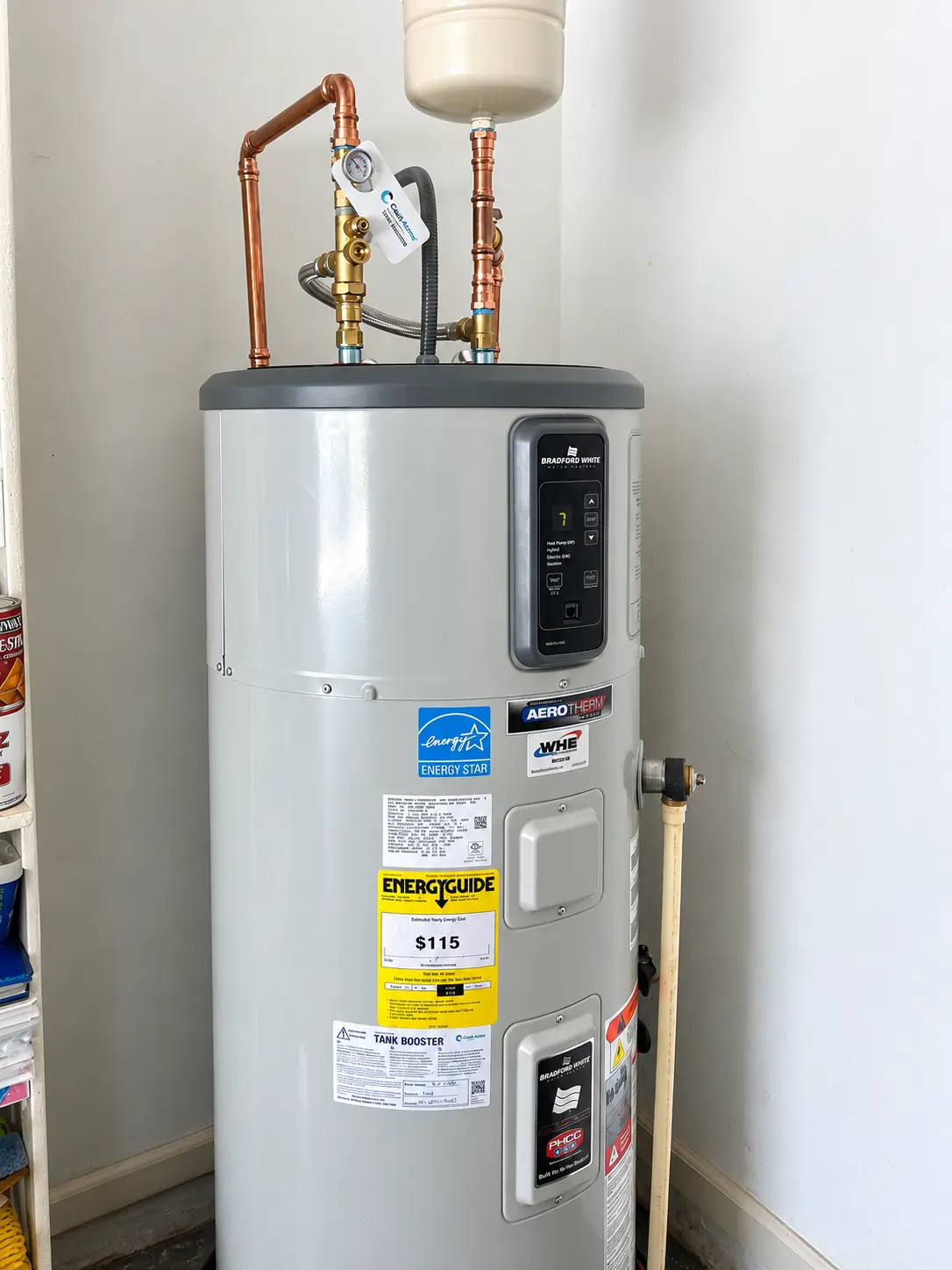
This more recent WHE installation shows a Bradford White AeroTherm hybrid system with a thermostatic tank booster and expansion tank. It is a different job from the Evergrene gas-to-hybrid conversion, included to illustrate current field equipment and piping options rather than imply every heater uses the same components.
Frequently asked questions
Is a hybrid water heater the same as a power-vent water heater?
No. A hybrid is usually an electric storage-tank heater that uses a heat pump and may have backup resistance elements. A power-vent water heater is gas-fired equipment that uses an electric blower to expel combustion exhaust. They heat and vent differently.
Can I replace a gas power-vent heater with an electric hybrid?
Often it is possible, but it requires an evaluation of the electrical circuit, safe gas and vent decommissioning, available space, airflow, condensate and hot-water demand. The work may require an electrician and permits.
Is a hybrid always cheaper to run than natural gas?
No. Heat-pump systems are typically efficient relative to electric-resistance heating, but operating costs compared with gas depend on utility rates, actual equipment efficiency and household use.
Does a hybrid water heater need outside venting?
It does not require combustion exhaust venting because it does not burn gas. It does require adequate intake and discharge airflow, and in some configurations manufacturer-approved air ducting. It also needs condensate drainage.
Are gas power-vent water heaters noisy?
The blower creates noise when operating, but the loudness differs by model and installation. Hybrids have fan/compressor noise too. Compare published model-specific sound information when available instead of relying on one universal dBA difference.
Does a hybrid require a 240-volt circuit?
Many integrated heat-pump water heaters do, but not all. Check the exact model’s nameplate and installation manual, and have qualified personnel evaluate the home’s electrical supply.
Is an 80-gallon hybrid better for a large family?
It may be appropriate, but tank size alone is not enough. Compare first-hour rating, recovery mode, simultaneous fixtures and available space. A larger hybrid may deliver different peak performance from a high-recovery gas storage tank.
Are hybrid water heater tax credits available for 2026 installations?
The federal Energy Efficient Home Improvement Credit ended for property placed in service after December 31, 2025, according to the IRS. Check current utility and local rebates separately instead of assuming a federal credit is available.
Compare the right system with Water Heating Experts
Water Heating Experts LLC is family-owned and master-plumber-owned, Florida Certified Plumbing Contractor CFC1426133. We help homeowners in Palm Beach Gardens, Jupiter, Tequesta and nearby northern Palm Beach County communities evaluate gas tank replacements and electric heat-pump alternatives. Send the current water heater’s model plate and a wider photo of its installation location so we can review the actual equipment and constraints.
For a broader fuel comparison, read our Electric vs. Gas Water Heaters guide. For a different comparison, see Hybrid vs. Tankless Water Heaters. For our original A.O. Smith garage heat-pump installation, see the A.O. Smith hybrid installation case study.
Original WHE Evergrene field photos and conversion story preserved. Educational installation guidance reviewed October 15, 2026. Exact model specifications, codes and incentives must be confirmed before purchasing or installing equipment.
Questions and comments
Have a question about this article? Share it below. Comments are reviewed before publication. For service, text WHE at 561-602-9062.