
80-Gallon Electric Water Heater Replacement Options
Replacing an older 80-gallon electric water heater starts with your household’s busiest hot-water hour, the installation space and the electrical supply. WHE compares practical replacement options for homes in Palm Beach Gardens, Jupiter and nearby Palm Beach County communities.
Family owned and master plumber owned. Florida Certified Plumbing Contractor CFC1426133.
Choose “Free Estimate for Water Heater Installation.” We follow up for photos and project details before confirming equipment and scheduling.
Start with hot-water demand
Tell us whether the current tank runs out, which showers or appliances operate together, and whether you fill a large tub. A tank’s gallon size describes storage; its first-hour rating also accounts for hot water supplied during the first hour from a fully heated tank. Review both before changing size.
Four replacement paths to compare
1. A conventional electric storage tank
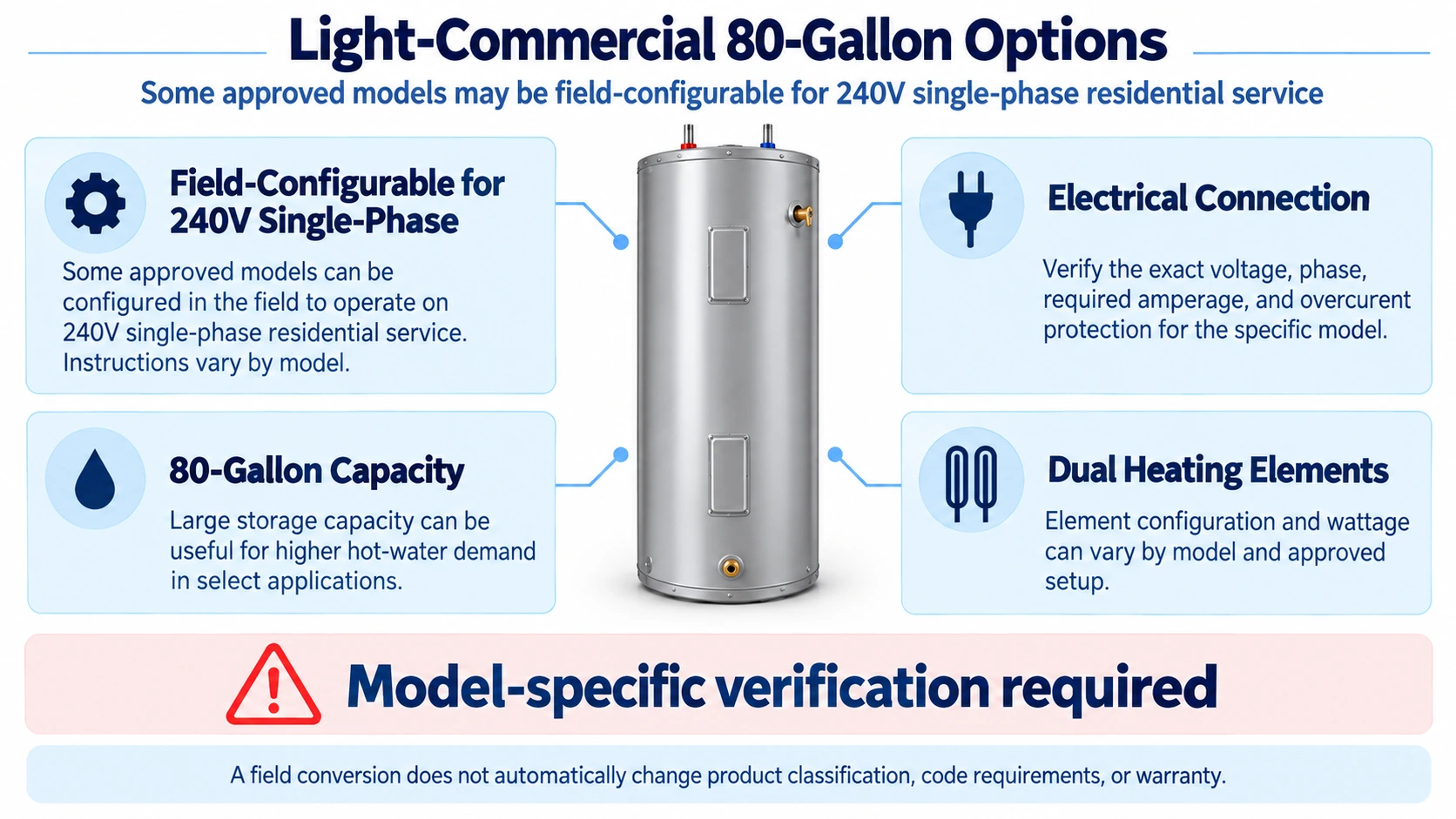
For an older 80-gallon resistance heater, start by reviewing a conventional electric storage replacement that meets your home’s needs. Many current 80-gallon resistance models are light-commercial products. Some approved models can be field-configured for 240-volt single-phase residential electrical service, subject to the exact manufacturer instructions, electrical capacity, code requirements and written warranty. Electrical conversion does not change a heater’s commercial classification. Compare the 80-gallon standard electric brand guide before selecting the exact unit.
2. A hybrid / heat pump water heater
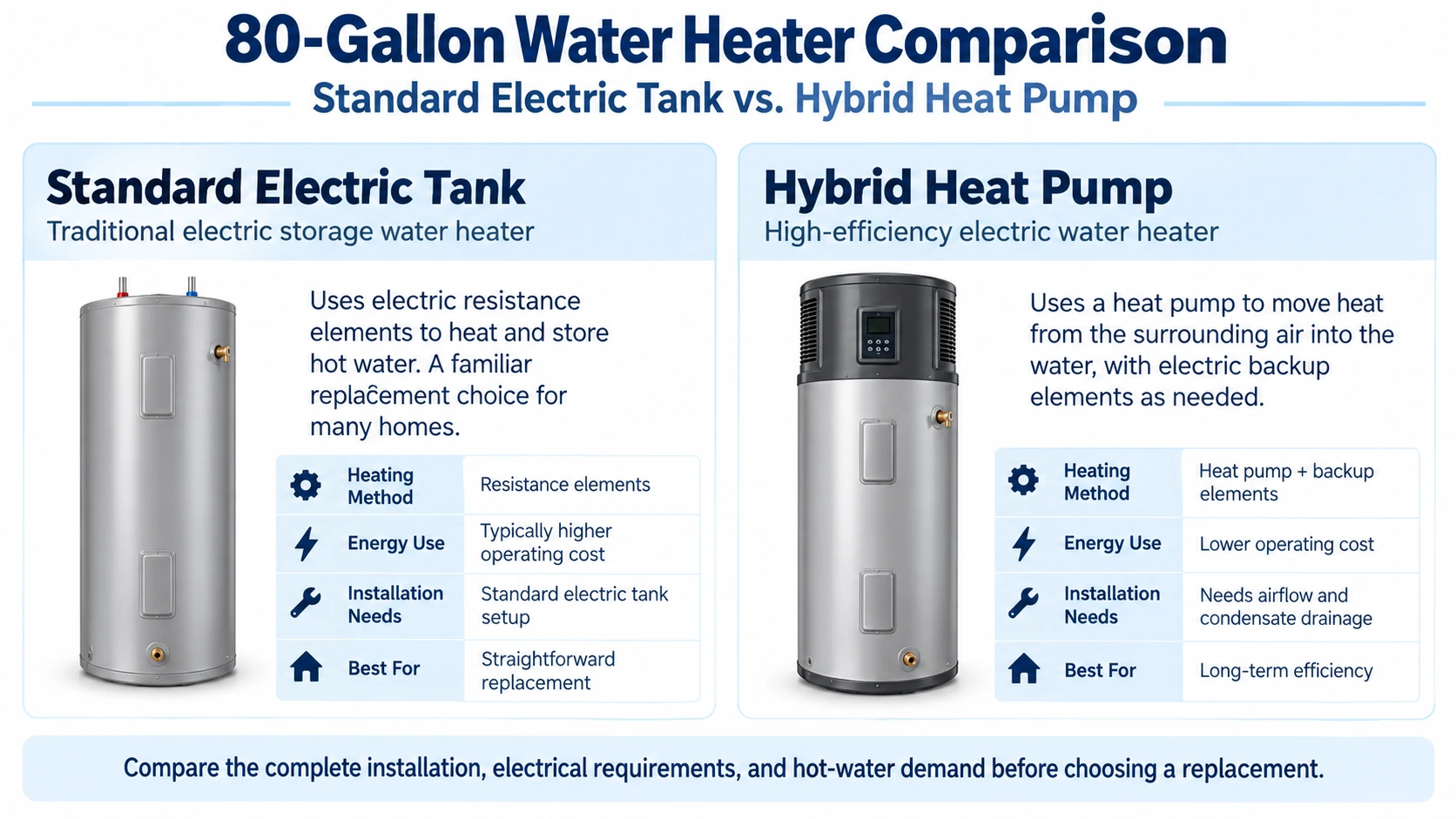
A hybrid uses electricity and heat from surrounding air to heat its stored water, typically with electric resistance backup. WHE checks dimensions, airflow, operating sound, electrical requirements and condensate drainage. Operating costs depend on model, settings and household use. Review our hybrid water heater installation guide and ENERGY STAR’s heat-pump guidance.
3. A tank with a designed booster or mixing system
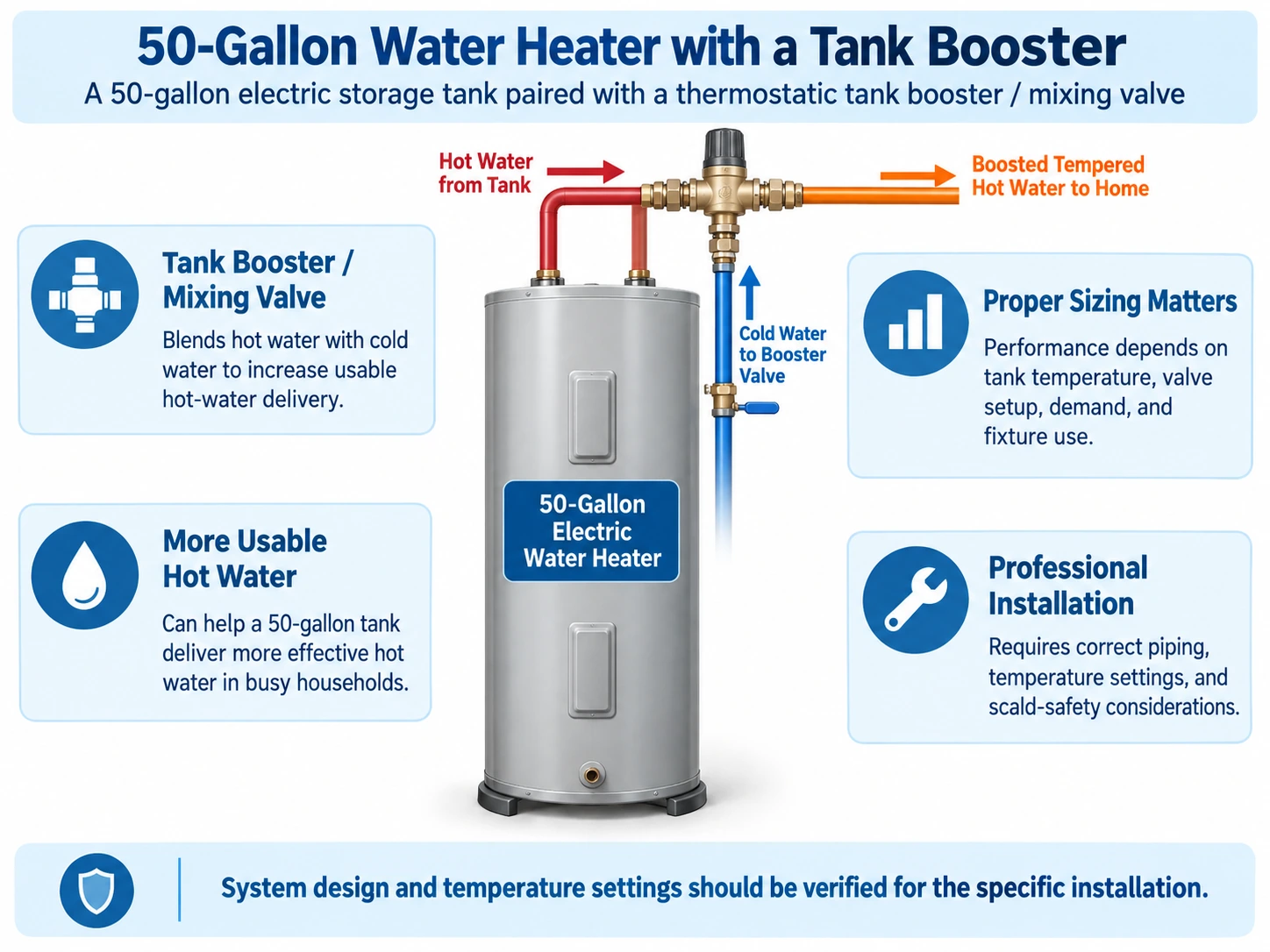
An electric booster adds heating; a thermostatic mixing valve blends stored hot water with cold water. These serve different purposes. Either approach needs a system-level review of demand, equipment compatibility and controls. A mixing system can increase usable delivery from stored water, but does not make a smaller tank equivalent in every situation.
Caleffi’s TankMixer instructions distinguish distribution temperature control from fixture-level scald protection. Proper design, adjustment and the required fixture protections matter; raising a thermostat alone is not our replacement recommendation.
4. An electric tankless conversion
Tankless equipment must match the simultaneous flow and temperature rise needed at your fixtures. WHE also reviews electrical service, available circuits and installation work before recommending a conversion. Stiebel Eltron’s specifications show how flow, voltage and power requirements vary by model.
Compare the equipment after choosing a direction
Use our 80-gallon water heater comparison to compare equipment categories. For unusually high demand, read our large-capacity residential water heater guide. Send a photo of the current heater and its label when we follow up so we can narrow the options.
80-gallon replacement questions
Do I have to replace an 80-gallon tank with another 80-gallon tank?
Not always. The replacement should meet your peak demand, available space and electrical supply. We also consider what did or did not work with the existing system.
Can a 50-gallon heater replace my 80-gallon heater?
Possibly, after sizing the system. A lower purchase price does not establish that a smaller tank will deliver the hot water your household needs.
Is a hybrid water heater electric?
Yes. Hybrid / Heat Pump describes the heater type; Electric is its energy source. Its installation requirements still need a model-specific review.
Does a tank mixing valve prevent every scalding risk?
No. A distribution mixing valve controls delivery temperature but does not replace any required protection at individual fixtures. WHE evaluates the complete system.
What determines the replacement price?
The selected heater, access, plumbing changes, electrical work and any drainage or airflow changes affect the estimate. Request an installation estimate for your home rather than relying on a tank-only price.