
What Is a Hot Water Heater? Types, Temperatures & Safety
A hot water heater is the appliance that supplies heated water for showers, sinks, laundry and other household uses. Hot water heaters may store heated water in a tank or heat it as it flows through the unit. Gas burners, electric elements, heat pumps and solar collectors provide different ways to do that job.
This guide explains the terminology, common equipment choices and temperature considerations, with actual Water Heating Experts installations. The right setup should deliver enough hot water while accounting for energy use, available space and scald protection.
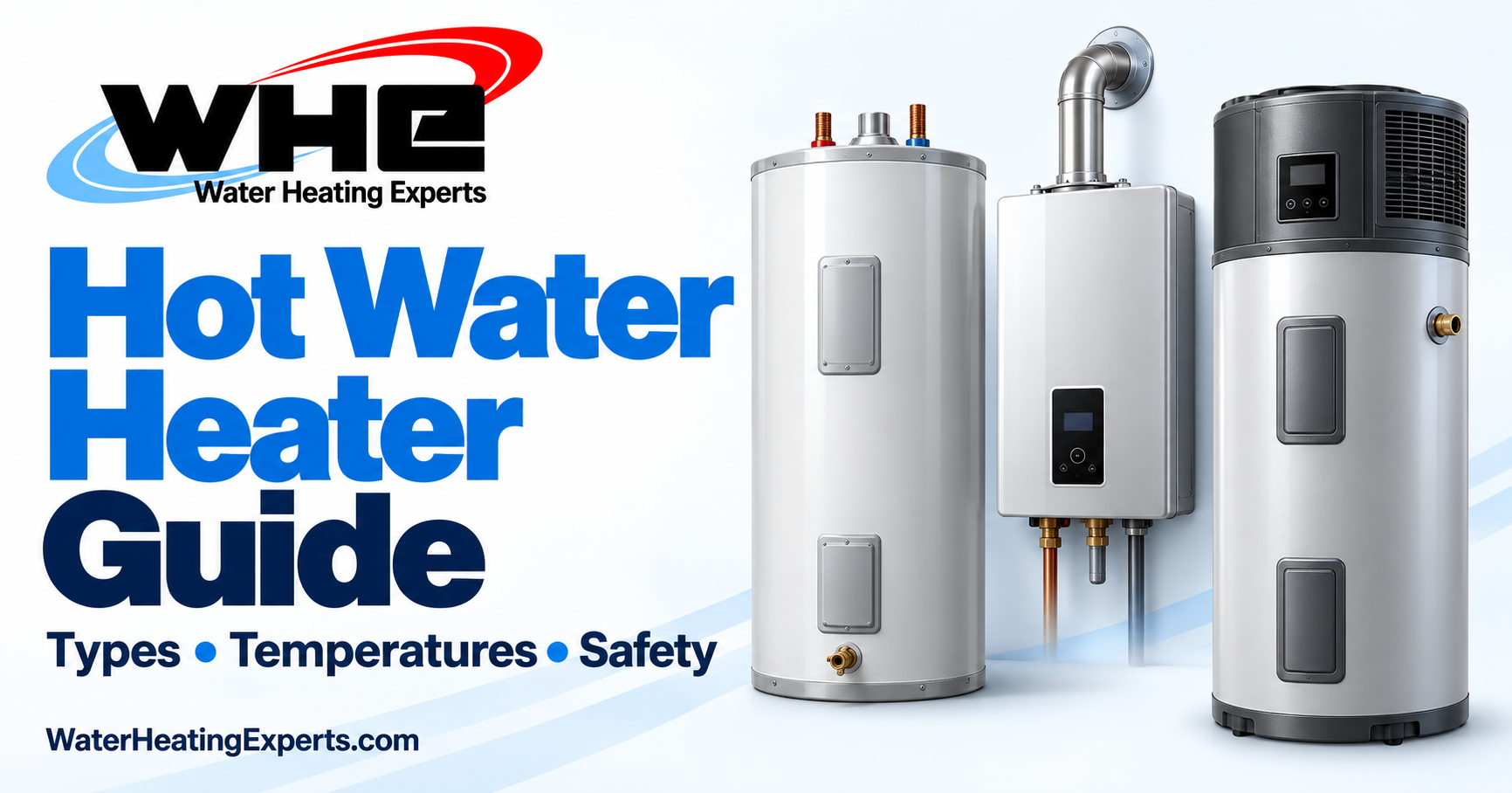
Is it a hot water heater or a water heater?
Water heater is the standard industry name. Hot water heater is a familiar everyday expression for the same appliance. You do not need to know the technical name to ask for help.
A storage heater also reheats water that has cooled below its setting, so the explanation that it “only heats cold water” misses part of how it works. For equipment selection, the useful questions are whether it has a tank, what powers it and how much hot water the household needs.
How does a hot water heater work?
In a conventional storage system, cold supply water enters an insulated tank. A thermostat controls the heating equipment, and heated water leaves the tank when a hot-water fixture is opened. As stored hot water is used, incoming cold water must be heated to replace it.
A tankless unit heats flowing water when demand activates it. Either design still needs plumbing to carry the heated water to the fixture. A tankless heater does not automatically eliminate the wait at a distant bathroom; pipe layout and a suitable hot water recirculation system affect that.
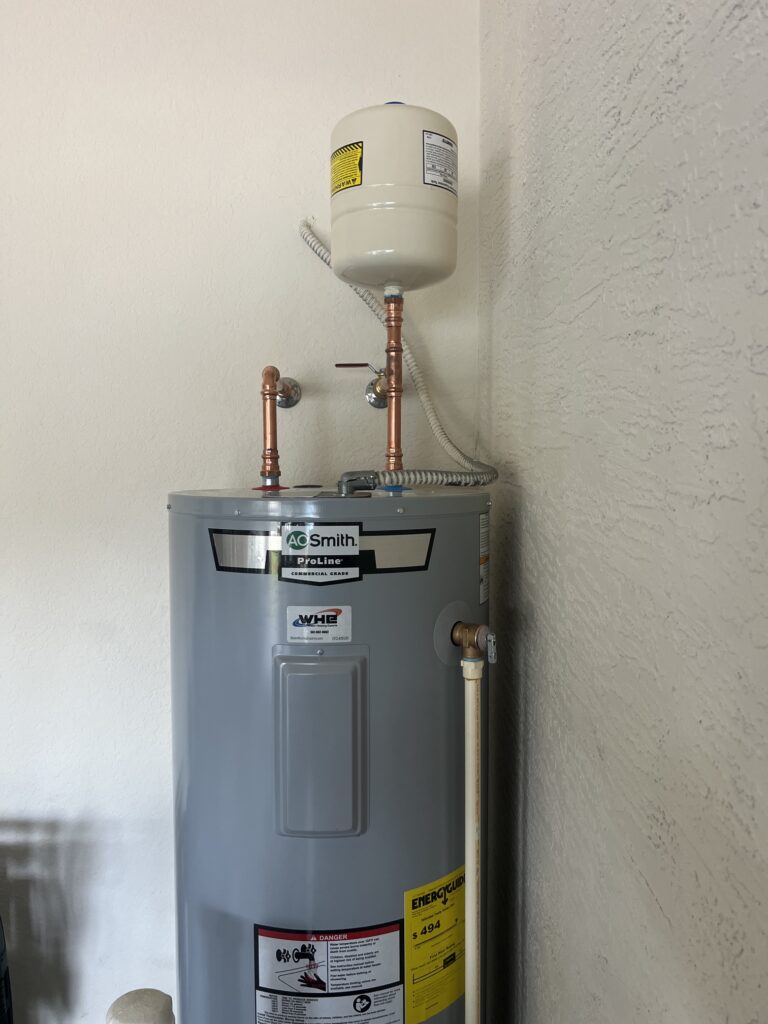
Types of hot water heaters and how they heat water
Tank and tankless describe the equipment design. Gas and electric describe the energy source. A heat pump water heater also uses electricity, but transfers heat from the surrounding air into stored water.
| Type | How it heats water | What to consider |
|---|---|---|
| Electric tank | Resistance elements heat water inside an insulated tank. | Tank dimensions, hot-water demand and electrical requirements. |
| Gas tank | A natural gas or propane burner heats stored water. | Correct fuel, venting, combustion air and recovery performance. |
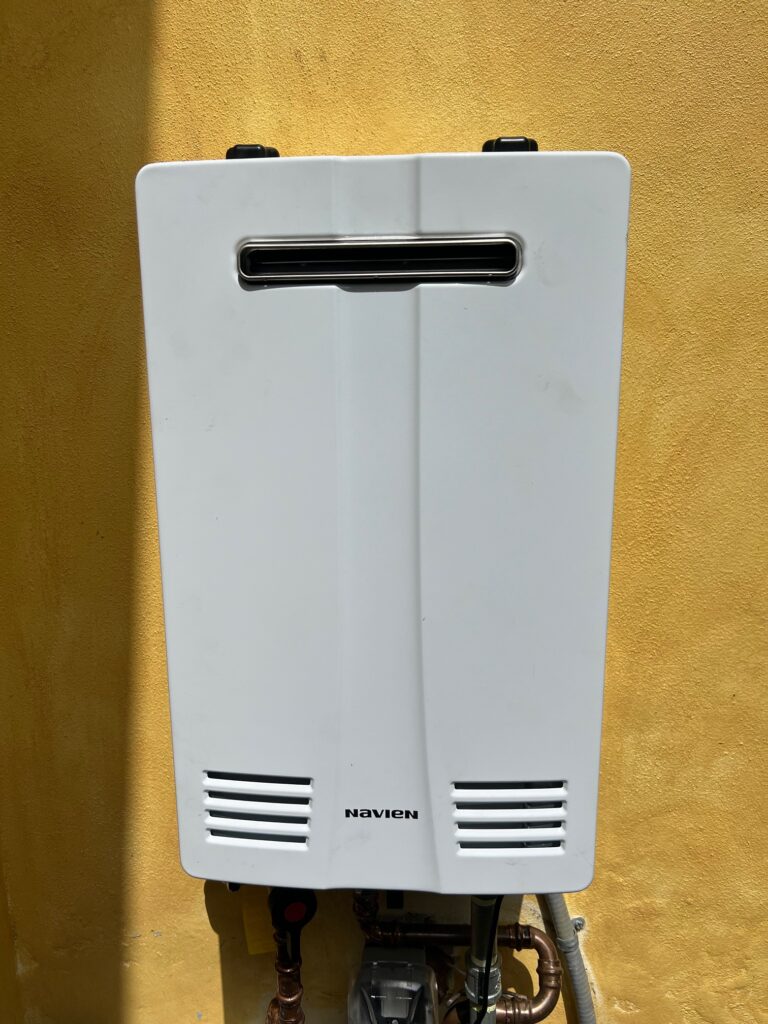
| Gas tankless | A burner heats water passing through a heat exchanger. | Flow at the required temperature rise, gas supply and model-specific venting. |
| Electric tankless | Electric elements heat water as it flows through the unit. | Available electrical capacity and simultaneous fixture demand. |
| Hybrid / heat pump | A heat pump transfers heat from air into stored water; many models also have resistance elements. | Airflow, room temperature, sound, condensate drainage and operating mode. |
| Solar thermal | Collectors capture solar heat for the water-heating system. | Collector and tank condition, controls and backup heating. |
Tankless hot water heaters: continuous heating has limits
A properly selected tankless system can keep heating while water is being used, but its output is limited. Several showers running together or colder incoming water can change the available flow. Gas and electric tankless conversions also have different installation requirements.
We review the household and the existing utilities before recommending a conversion. Our hybrid versus tankless guide explains the tradeoffs in more detail.
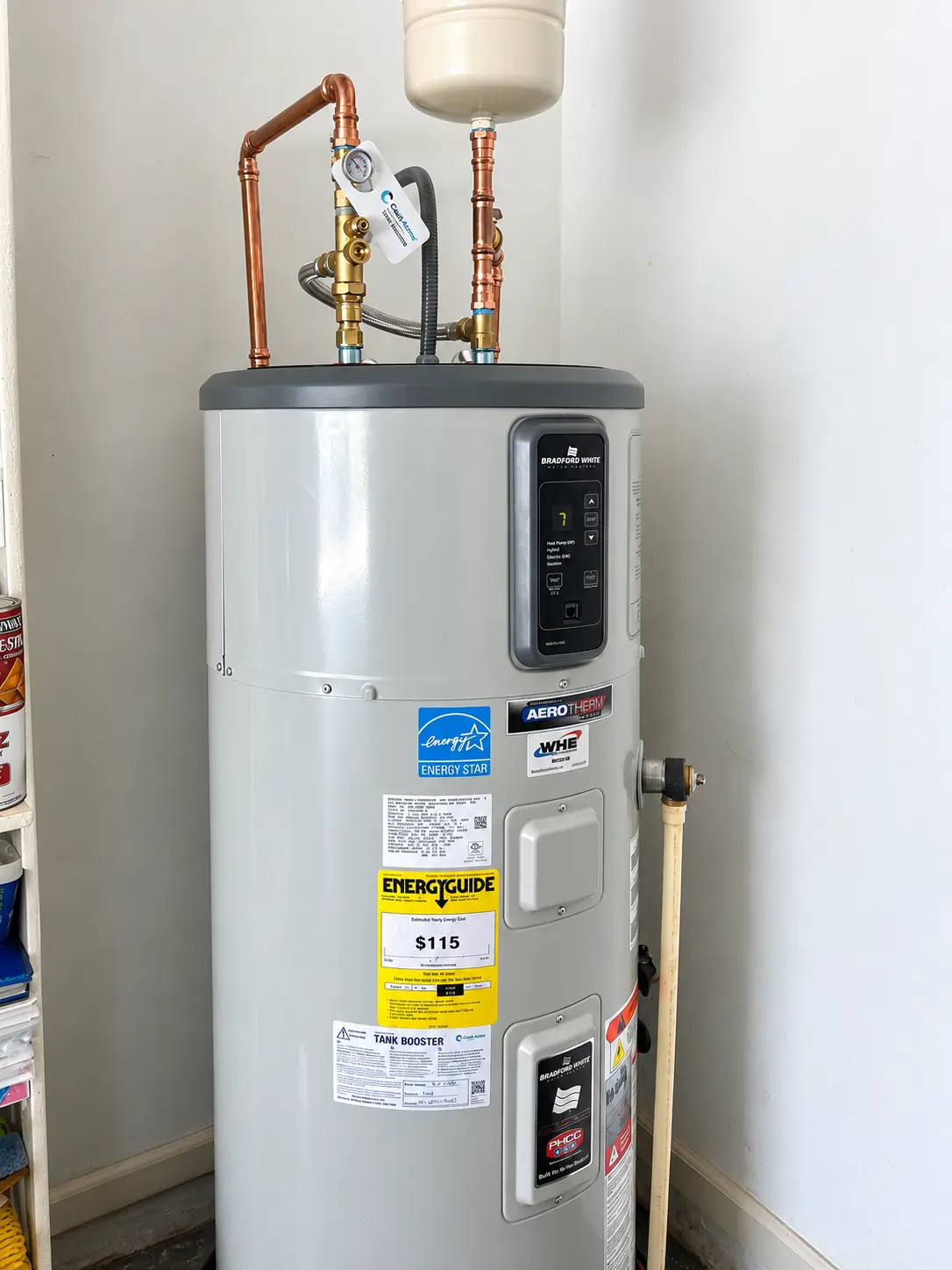
Hybrid and solar water heaters use heat differently
A hybrid heat pump water heater captures heat from the surrounding air. Many models use electric resistance elements when the selected mode or demand calls for them. The Department of Energy explains this heat-transfer process. A warm Florida garage can be a useful location, provided the installation meets the model’s airflow, temperature, drainage and clearance requirements.
Solar thermal systems collect heat from sunlight and commonly use backup heating when solar input is insufficient. They are different from rooftop solar-electric panels powering a conventional appliance. See DOE’s solar water heating overview for the basic system concept.
What temperature should a hot water heater be set at?
Separate the storage temperature from the temperature delivered at the tap. A tank setting tells you the target inside the heater. Mixing controls, pipe conditions and fixture settings affect the water that reaches a person.
The U.S. Consumer Product Safety Commission recommends 120°F to reduce tap-water scald risk. That is a common residential reference point, but it is not a guarantee against burns or a universal setting for every water system.
There is also a water-quality consideration. CDC’s household guidance discusses 130–140°F water for reducing germs such as Legionella, alongside the increased burn risk. CDC advises thermostatic mixing valves at taps when the heater is set above 120°F. People at increased risk of Legionella illness should discuss their individual risk with a healthcare provider.
Have a qualified professional evaluate storage temperature and delivery protection together, following the equipment instructions and applicable requirements. For a condo with a shared hot-water system, coordinate with building management before changing controls. A thermostat marking such as “Hot” or “A” is not a reliable substitute for checking the model’s manual and measuring delivered temperature.
How to reduce scalding risk
Hot water can injure quickly. CPSC gives about six seconds at 140°F as an example of exposure that can cause burns; it also warns that prolonged exposure to 120°F water can cause serious injury. These examples are warnings, not safe exposure times. Children, older adults and people with limited mobility or sensation need particular protection.
- Check delivered temperature. Use an appropriate thermometer and avoid direct exposure to potentially hot water. Check the fixtures people actually use.
- Use suitable mixing and fixture controls. Have a plumber select, set and verify the correct protection for the installation.
- Supervise bathing. Never leave a young child alone in a bathtub, even when temperature controls are installed.
- Investigate temperature changes. Unexpectedly hot water or unstable delivery calls for evaluation of the heater and plumbing controls.
- Maintain protective devices. Follow the manufacturer’s inspection and service instructions; valves need ongoing care.
Opening electrical access panels or servicing gas controls is not part of a casual temperature check. If you are uncertain about an adjustment, have a qualified service professional handle it.
What does a thermostatic mixing valve do?
A thermostatic mixing valve blends hot and cold water to control its outlet temperature. Some systems store water at a higher temperature and mix it down for delivery. A compatible tank-booster arrangement can also increase usable mixed-water capacity; the result depends on the tank, temperatures, flow and valve.
Protection at the heater and protection at individual fixtures serve different installation needs. A valve at the tank does not automatically establish that every faucet or shower has adequate scald protection. The product must be suitable for its application and properly installed, adjusted and maintained. Cash Acme’s product guidance provides details for one tank-booster system.
Read our tank booster guide for a closer look at this option. Increasing the thermostat alone is not the same as installing a properly controlled system.
Choosing a hot water heater for your home
Start with the household’s busiest hot-water period and the installation space. For a storage heater, compare capacity and first-hour delivery. For tankless equipment, compare output at the temperature rise your home needs. Then check the fuel or electrical supply, access, ventilation where applicable, and full installed cost.
WHE evaluates these details before recommending equipment. Our Water Heater Selector can help you explore choices, and the electric versus gas comparison explains the broader differences. Final selection requires a review of the actual installation.
If you are evaluating an existing heater, start with the Water Heater Age Lookup and our water heater lifespan guide. An insurer or condo association may also impose a separate deadline; see our explanation of insurance and HOA replacement requirements.
Frequently asked questions about hot water heaters
Is a hot water heater different from a water heater?
Usually, no. Homeowners commonly use both names for the appliance that supplies heated water to household fixtures. Water heater is the standard industry term.
Do hot water heaters run all the time?
Storage models cycle their heating equipment as needed to maintain temperature and recover after use. Tankless models heat in response to demand, although some also have recirculation or freeze-protection functions.
Do all hot water heaters use gas?
No. Options include electric resistance, gas, electric heat pump and solar thermal systems. Tankless models can use gas or electricity.
Does a tankless hot water heater give instant hot water at every faucet?
No. Water in the pipe between the heater and the fixture may need to be displaced first. Distance, piping and recirculation affect the waiting time.
Is 120°F water completely safe?
No. Lower delivery temperatures reduce scald risk, but exposure time and the person’s vulnerability still matter. Temperature controls and supervision remain important.
Should I turn up the heater if I keep running out of hot water?
Have the cause checked first. Demand, equipment condition, sizing and plumbing controls can all affect supply. Any higher storage setting needs appropriate delivery-temperature protection.
Can a mixing valve help an existing tank?
A suitable tank-booster system may increase usable mixed-water capacity and control outlet temperature. It must match the equipment and application, and it does not repair a leaking or failed tank.
What should I send WHE when asking about replacement?
Send photos of the complete heater, its model and serial label, and the surrounding space. Include the problem you are noticing, your city and any insurance or association deadline.
Hot water heater help in Palm Beach County
Water Heating Experts LLC is family-owned and master-plumber-owned, Florida Certified Plumbing Contractor CFC1426133. We help homeowners in Palm Beach Gardens, Jupiter, Tequesta, Juno Beach, West Palm Beach and Wellington evaluate hot water heaters and plan suitable replacements.
Text 561-602-9062 with photos and a short description, or request a free water heater installation estimate online.
Manufacturer, Department of Energy, CPSC and CDC guidance reviewed October 20, 2026. Follow the instructions for your equipment and have temperature controls assessed for your household and building.