
Types of Water Heaters: Tank, Tankless, Hybrid & Solar
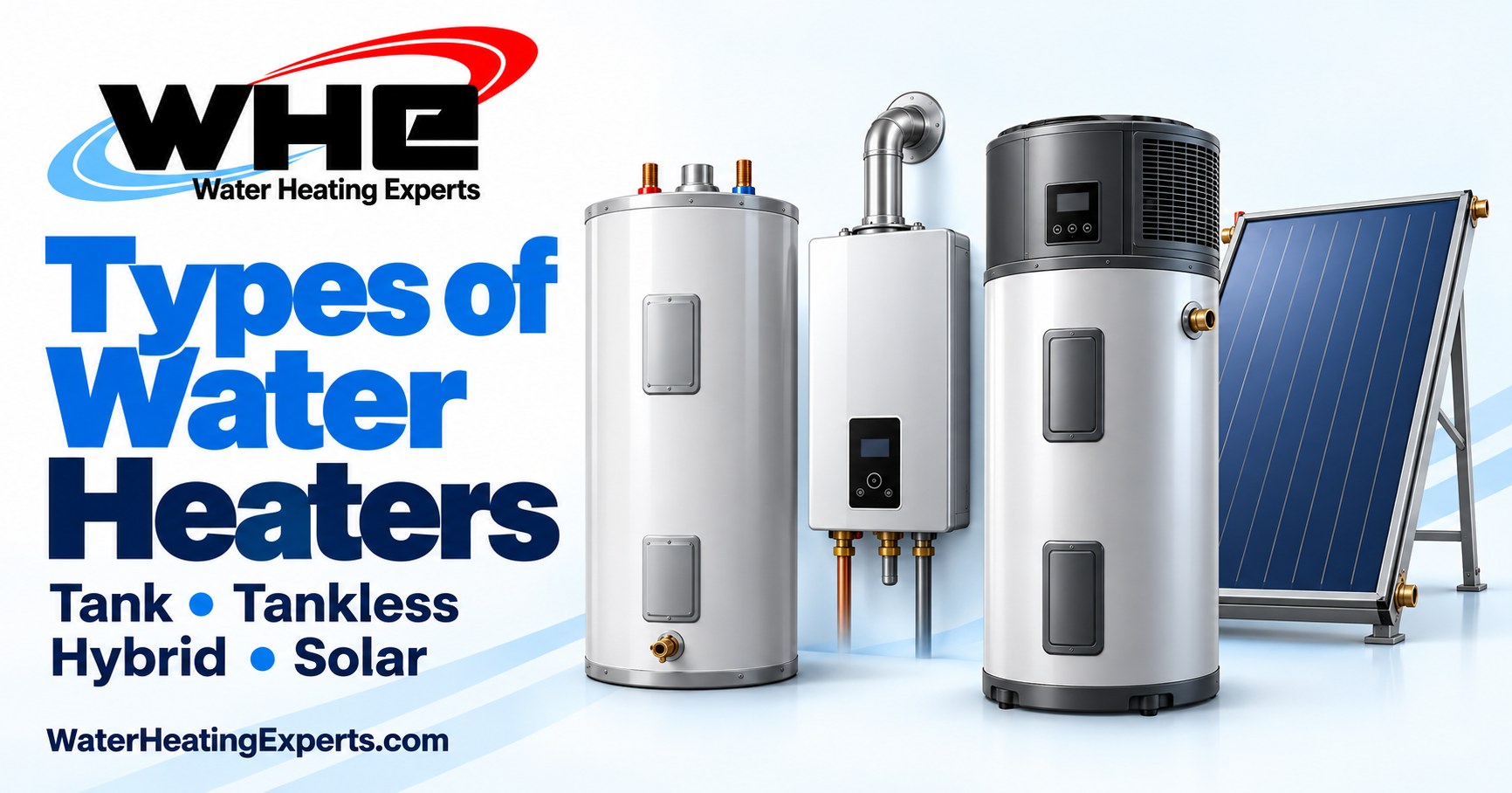
The main types of water heaters include electric storage tanks, gas storage tanks, hybrid heat pumps, gas tankless, electric tankless and solar thermal systems. Each heats water differently, and the right choice depends on your household’s demand, available utilities and installation space.
This guide compares the practical advantages and limitations of different hot water heaters. It also explains condensing models, point-of-use units and indirect systems, with genuine Water Heating Experts installation photos and links to help you explore your options.
Jump to: Comparison chart · Electric tank · Gas tank · Hybrid · Gas tankless · Electric tankless · Solar · How to choose
Types of Water Heaters at a Glance
Tank or tankless describes the design; gas or electric describes the energy source. A hybrid hot water heater is also electric and normally has a storage tank. “Condensing” describes how a gas appliance recovers heat, while “point of use” describes where it serves your home. These labels can overlap.
| Type | How it works | Worth considering for | Main checks |
|---|---|---|---|
| Electric storage tank | Electric resistance elements heat stored water. | A like-for-like replacement where the existing electrical supply and space are suitable. | Stored supply can be depleted; check first-hour delivery and recovery. |
| Gas storage tank | A natural gas or propane burner heats stored water. | Homes with suitable gas service and an approved venting arrangement. | Correct fuel, gas supply, venting and combustion-air requirements. |
| Hybrid / heat pump | An electric heat pump transfers heat from surrounding air into a tank. | Reducing electricity use where the location supports efficient heat-pump operation. | Airflow, room temperature, noise, condensate drainage and operating mode. |
| Gas tankless | A gas burner heats water as it flows through. | Continuous hot-water use within the unit’s rated output. | Simultaneous flow, temperature rise, gas supply, venting and service access. |
| Electric tankless | Electric elements heat flowing water. | Compact installations with enough electrical capacity for the required output. | Electrical load and flow at the actual incoming-water temperature. |
| Solar thermal | Collectors capture solar heat for a stored-water system. | Homes with a suitable solar installation or an existing system worth maintaining. | Collectors, tank compatibility, controls, backup heating and system condition. |
Use the chart to narrow the options, then compare the actual equipment. Two hot water heaters with similar capacities can have different recovery rates, electrical requirements and installation needs.
Electric Storage Tank Water Heaters
A conventional electric water heater uses resistance elements to heat water stored inside an insulated cylinder. It maintains a reserve for showers and other uses, then reheats as that supply is drawn down.
Why consider one: an electric hot water heater can be a practical replacement when the home already has a suitable circuit and tank location. It does not require a combustion exhaust vent. Tall, short and lowboy configurations can help address different spaces, although dimensions must be checked.
What to weigh: stored hot water is finite, and recovery matters when showers run back to back. Conventional resistance heating also uses electricity differently from a heat pump; compare the operating-cost estimate as well as the installed quote.
Explore WHE’s electric tank installation service and our water heater size guide before choosing by gallon capacity alone.
Gas Storage Tank Water Heaters
A gas water heater with a storage tank burns natural gas or propane to heat a stored supply. Many models offer strong recovery, but compare the specific unit’s first-hour rating and burner input instead of assuming that every gas tank performs alike.
Why consider one: a gas hot water heater may suit a home with existing gas service, compatible venting and repeated periods of hot-water use. Natural gas and propane equipment must match the home’s fuel supply.
What to weigh: atmospheric vent, power vent and direct vent describe different arrangements. A replacement must suit the required venting and combustion-air design; matching tank size is not enough. Utility prices and the model’s efficiency affect running costs.
See gas tank installation options and our electric versus gas comparison. A.O. Smith’s gas equipment guide also illustrates the range of storage and venting configurations.
Hybrid Heat Pump Water Heaters
A heat pump moves heat from surrounding air into stored water. Many residential hybrid hot water heaters combine that heat pump with electric resistance elements for backup or higher demand. “Hybrid” does not ordinarily mean switching between gas and electricity.
Why consider one: moving heat can use substantially less electricity than producing the same heat with resistance elements. A suitable warm garage or utility area can make this option especially worth evaluating in South Florida.
What to weigh: the location needs the manufacturer’s specified air supply, clearances and temperature range, plus a condensate drainage plan. Consider fan/compressor sound and the cooler exhaust air. Tank size and mode selection affect how often backup elements operate.
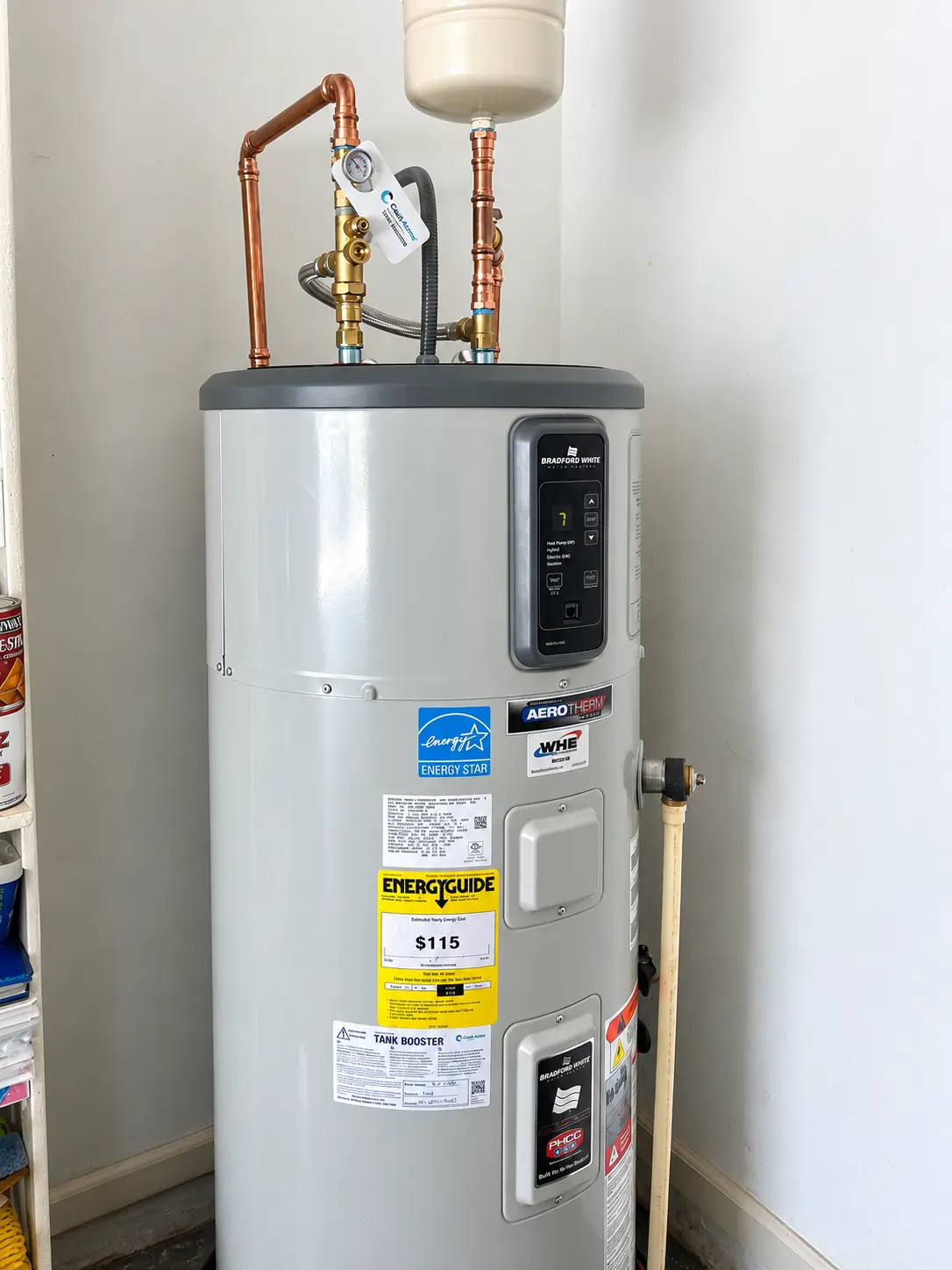
Read about WHE’s hybrid installation service. ENERGY STAR’s design guidance explains why location, airflow, capacity and drainage belong in the decision.
Gas Tankless Water Heaters
A gas tankless unit heats flowing water through a heat exchanger when demand activates it. It can keep heating during a long shower, provided the total hot-water flow stays within its output at the required temperature rise.
Why consider one: a gas hot water heater without a large storage tank can free floor space and support extended use. It is worth comparing when you want continuous delivery and the property can support the gas supply and installation requirements.
What to weigh: “continuous” does not mean unlimited simultaneous showers. A cold incoming supply requires more heating, which reduces available flow. Gas piping, approved venting or outdoor configuration, electrical power, condensate handling where applicable and maintenance access all need review.
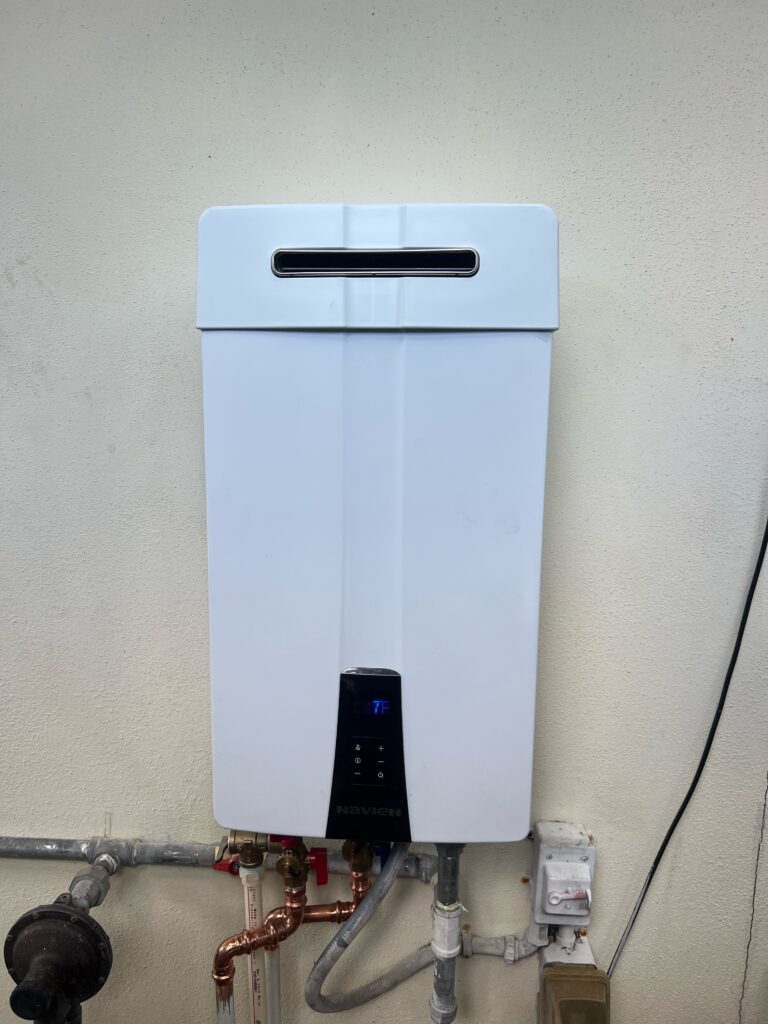
See our gas tankless installation service. If the main problem is waiting for hot water at a distant bathroom, compare a suitable recirculation solution; tankless equipment alone does not remove water already sitting in the pipe.
Electric Tankless Water Heaters
Electric tankless equipment uses resistance elements to heat water as it passes through. Like gas tankless, its useful output depends on flow and the temperature increase required.
Why consider one: an electric tankless hot water heater is compact and needs no gas line or combustion vent. It can fit some homes well when the electrical supply and hot-water demand match the selected model.
What to weigh: whole-home models can require multiple dedicated circuits and substantial electrical capacity. Do not assume the circuit serving an existing tank can power its tankless replacement. A load assessment and the manufacturer’s requirements determine whether electrical upgrades are needed.
Stiebel Eltron’s Tempra specifications show how circuit requirements and temperature-rise performance vary by model. WHE’s electric tankless installation page explains what to review before committing to a conversion.
Solar Water Heaters
Solar thermal water heaters use collectors to capture the sun’s heat for a stored-water supply. This differs from rooftop photovoltaic panels generating electricity to run household appliances. A solar hot water heater generally includes backup heating for times when solar input is insufficient.
Why consider one: a suitable system can reduce purchased energy for water heating. If a home already has solar thermal equipment, evaluate its condition before deciding whether to retain the system, replace the tank or change technology.
What to weigh: the collectors, controls, circulation equipment, tank connections and backup heat must work together. Roof conditions, sun exposure and climate protection also matter. ENERGY STAR’s solar guidance outlines these buying considerations.
WHE provides solar storage-tank replacement and associated plumbing service. Rooftop collector or other solar-system work may require coordination with a qualified solar-thermal specialist; we confirm the scope for each project.
Condensing Water Heaters: An Efficiency Feature
A condensing gas hot water heater captures additional heat from combustion exhaust before that exhaust leaves the appliance. Cooling the exhaust causes water vapor to condense into liquid, which must be drained appropriately.
Condensing designs are available in both storage-tank equipment and tankless equipment. They require the manufacturer’s approved venting and condensate arrangement. This is a feature to compare within gas options, not a separate fuel type.
Point-of-Use Hot Water Heaters
A point-of-use appliance serves a nearby sink or small group of fixtures. It can be a mini storage tank or a small tankless unit. The purpose is local delivery, rather than automatically supplying the entire house.
For example, Stiebel Eltron’s mini-tanks can serve a sink or supplement a distant hot-water source. Compare fixture demand, electrical requirements, available space and the plumbing arrangement before choosing one.
Indirect Hot Water Heaters
An indirect system uses another heat source, commonly a space-heating boiler, to warm domestic water through a heat exchanger and store it in a tank. It belongs in a national comparison, particularly when a home already uses boiler heat.
Bradford White’s indirect models illustrate this approach. The selection depends on the boiler and tank working together, so it is a different decision from replacing a standalone electric tank.
Which Type of Water Heater Is Right for Your Home?
The best hot water heater is the one that meets your demand and fits the property at an acceptable installation and operating cost. Start with these questions:
- What do you have now? Photograph the unit, model label and surrounding connections. Our age lookup guide can help you plan a replacement.
- What problem are you solving? Running out of hot water, high energy use, limited space and a long wait at the faucet can call for different solutions.
- How much delivery is needed? Use our household sizing guide to evaluate peak demand. Compare tank delivery and recovery, or tankless flow at the required temperature rise.
- What can the property support? Review electrical capacity, gas availability, venting, clearances, drainage and service access before selecting equipment.
- What is the full project cost? Compare the installation scope, expected energy use, maintenance and warranty terms. A low equipment price alone does not establish the least expensive choice.
For a Florida garage installation, a hybrid may be worth a close look when air supply and drainage are suitable. In a condo, confirm building requirements and the available space before assuming a different type will fit. For attic equipment, ask whether relocating it to the garage is practical.
Try the WHE Water Heater Selector to explore options, then have the proposed equipment and installation checked. If an existing healthy tank falls short, our tank booster guide explains an accessory that may improve usable delivery without changing the basic heating technology.
Frequently Asked Questions
Is a hybrid hot water heater the same as tankless?
No. A typical residential hybrid stores water in a tank and uses a heat pump, often with resistance backup. A tankless unit heats flowing water on demand. They solve different installation and energy-use needs.
Is tankless always the most efficient choice?
No. Compare the actual models and energy sources. A heat pump can use substantially less electricity than resistance-based heating. Your demand, operating mode and utility rates affect the practical savings, while installation costs affect the overall decision.
Can I replace an electric tank with an electric tankless hot water heater?
Sometimes, but first confirm output at your required temperature rise and have the electrical load assessed. Existing wiring, breakers or service capacity may need changes. The compact cabinet does not mean the conversion is automatically simple.
Which type works best for a large family?
There is no single answer. Compare the busiest hour, simultaneous fixtures and recovery needs. A properly sized storage, hybrid or tankless arrangement may work; household size alone does not settle the choice.
Compare Your Options With Water Heating Experts
Water Heating Experts helps homeowners in Palm Beach Gardens, Jupiter, Tequesta, Juno Beach, West Palm Beach and Wellington compare replacement options for their homes.
Text 561-602-9062 with photos of your current hot water heater, model label and installation area, plus what you want to improve. We can review the project and explain the next step.
Additional reference: A.O. Smith’s overview of equipment types. Product manuals and a site evaluation determine the requirements for a particular installation.