
Hot Water Recirculation Pump: Faster Hot Water at Home
Waiting too long for hot water at your shower or kitchen sink? A properly selected hot water recirculation pump can shorten the wait and reduce the water sent down the drain. The best arrangement depends on your home’s pipe layout, whether it has a dedicated hot-water return line, and your type of water heater.
Water Heating Experts serves Palm Beach Gardens, Jupiter, Tequesta, Juno Beach and nearby Palm Beach County communities. We assess the piping before recommending a pump. Faster hot water is not a guarantee of truly instantaneous water at every fixture; small branch lines can still hold cooled water.
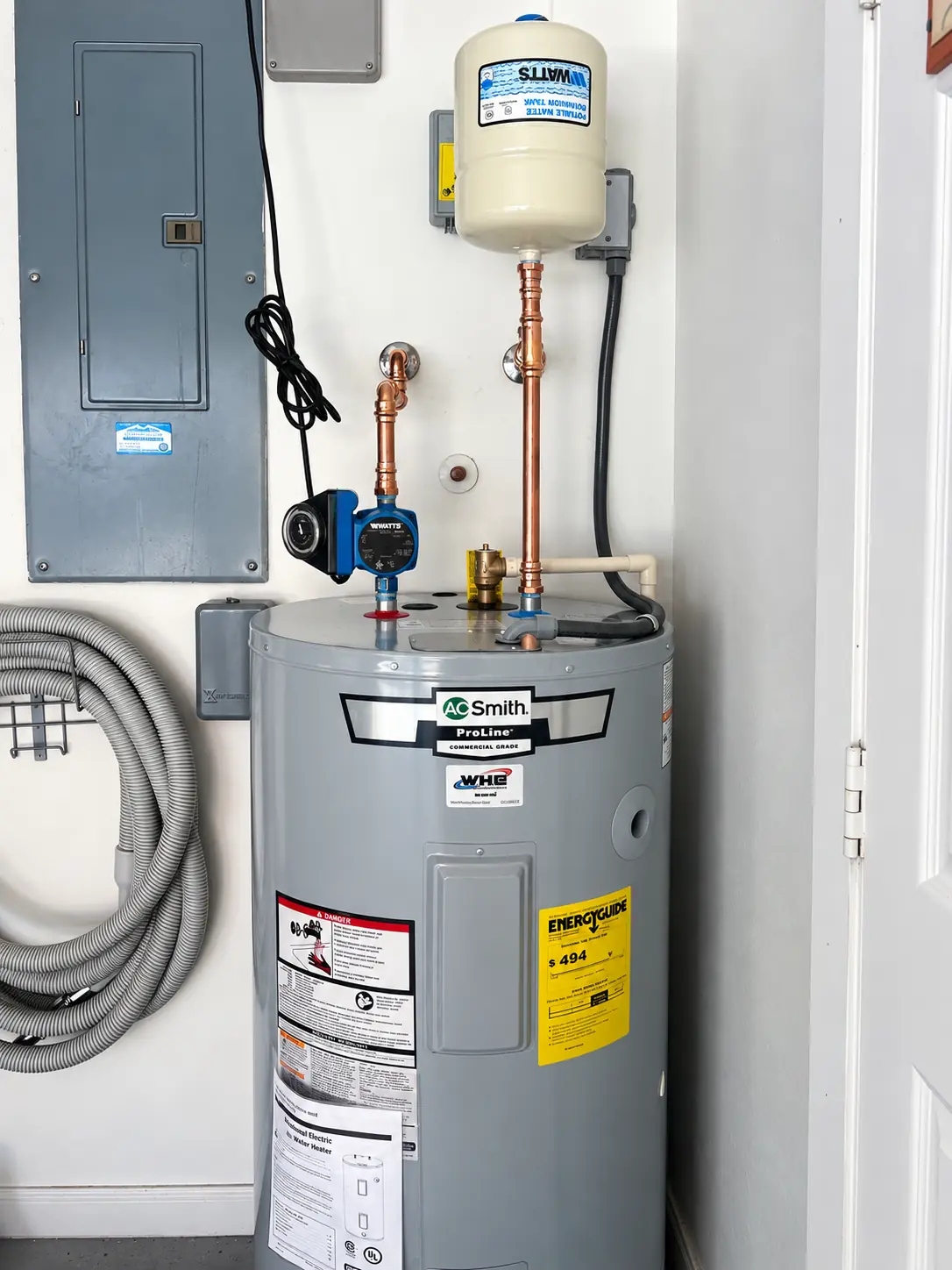
How Does a Hot Water Recirculation Pump Work?
After hot water sits in the pipes, it cools. Without recirculation, you run a faucet until that cooled water clears. A pump moves the water through an appropriate return path so hot water can reach fixtures sooner when you need it. It does not increase a water heater’s capacity or fix a failing heater.
| Recirculation layout | How it works | Best considerations |
|---|---|---|
| Dedicated return line | Uses a separate pipe to carry recirculated water toward the heater | Often suitable where a return loop already exists; controls and check valves must match the heater |
| Under-sink sensor or crossover valve | Uses the existing cold-water line temporarily as a return path | Often possible without new return piping, but the cold line may be briefly warm |
| Demand-activated circulation | Runs the compatible pump when triggered by a button, sensor or approved control | Can reduce unnecessary pump operation and heat losses compared with continuous recirculation |
Proper piping and controls matter. EPA WaterSense guidance emphasizes efficient hot-water distribution design and demand-initiated circulation to reduce waiting, water waste and needless energy use.
Watts Heat H2O Recirculation System: Features and Limits
The original article discussed the Watts HWRS-WH pump with its programmable timer and thermostatic under-sink sensor valve. Watts still lists the HWRS-WH; its older 500800 pump (ordering code 0955800) is listed as discontinued and replaced by the HWRS-WH. Check the exact model and part numbers before ordering.
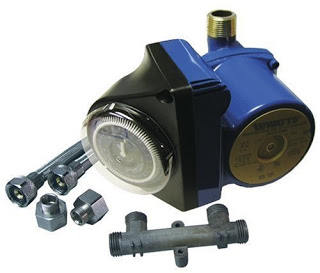
- Programmable timer: The pump can be scheduled around normal periods of high hot-water use rather than running around the clock.
- Sensor valve: A thermostatic valve near a distant sink transfers cooled water into the cold line; certain branched layouts can need additional compatible valves.
- Possible warm cold water: Water at the valve’s cold faucet may be briefly lukewarm when the pump is active.
- Not for tankless heaters: Watts specifically says that HWRS-WH is not designed for tankless water heaters. A different manufacturer-approved recirculation approach may work with certain tankless models.
- No fixed savings promise: Although reduced waiting can save water, pump electricity and additional heat loss can affect the energy bill. Savings depend on use and layout.
See Watts’ HWRS-WH model information and the manufacturer’s installation instructions. The Watts 0955801 sensor valve kit is identified for compatible branched lines, not a dedicated return loop.
What WHE Checks Before Recirculation Pump Installation
First, we determine whether your problem is a long wait for hot water or not enough hot water. A recirculation pump treats delivery time, not an undersized or malfunctioning water heater.
- Heater model: Identify tank, tankless or hybrid equipment and its permitted circulation connections and controls.
- Home layout: Locate the furthest fixtures, branching lines, existing returns and practical crossover-valve locations.
- Plumbing and safety: Check appropriate shutoffs, check valves, pressure, pipe routing and manufacturer-required installation details.
- Power and controls: Confirm suitable pump power supply, safe placement and timer or demand-based operation.
- Testing: Check leaks, flow direction, functionality and actual wait times once the system is installed.
Costs and installation time vary by home. A simple compatible crossover-valve retrofit is different from adding a dedicated return line. For tankless heaters, always follow the water-heater manufacturer’s approved piping and control arrangements.
Are Hot Water Recirculation Pumps Worth It?
For households that regularly wait a long time for hot water, they can improve convenience and reduce the amount of water wasted at taps. They are less helpful for homes whose existing heater cannot keep up with demand. A continuously operating recirculation pump can also increase heat loss, so consider properly designed demand controls and pipe insulation where appropriate.
There are tradeoffs: crossover systems can briefly make cold water warm, branches may still take time to flush, and operating costs depend on the system. A sensor valve is not an anti-scald device; safe water temperatures still matter. A plumbing assessment is more useful than promising ‘instant’ water or a fixed percentage off the water bill.
If your home runs out of hot water rather than making you wait, see our separate not-enough-hot-water guide.
Hot Water Recirculation Pump FAQs
Will a recirculation pump give instant hot water at every faucet?
It usually reduces the wait, but may not eliminate it. Branch pipes between a loop and the fixture still contain some cooled water. Results depend on the system and home.
Can the Watts HWRS-WH be used with a tankless water heater?
No. Watts specifically excludes tankless water heaters for this model. Other recirculation equipment may be suitable for particular tankless models when approved by their manufacturers.
Can I add recirculation without a dedicated return line?
Possibly. Some storage-tank setups use a compatible under-sink sensor valve and the cold-water pipe as a temporary return. A dedicated return loop is another option.
Why is the cold water sometimes warm after installing a bypass valve?
Thermostatic crossover valves temporarily move cooled water from the hot side into the cold side, so the affected cold fixture can briefly run lukewarm.
Do recirculation pumps save electricity?
Not necessarily. They can reduce water waste, but operating the pump and keeping pipes hot can increase electricity use or heat loss. Controls and design affect the balance.
Will a recirculation pump solve running out of hot water?
No. It improves how quickly hot water reaches a fixture, not your water heater’s heating capacity. A plumber can diagnose shortages separately.
Recirculation Pump Installation in Palm Beach County
Water Heating Experts LLC is a family-owned, master-plumber-owned Florida Certified Plumbing Contractor, license CFC1426133. We serve Palm Beach Gardens, Jupiter, Tequesta, Juno Beach and nearby Palm Beach County communities.
Call 561-602-9062 to discuss a recirculation retrofit or request a free water-heater installation estimate. We can review the appropriate pump/valve design and installation scope for your home.