
Water Heater Size Guide: What Size Do You Need?
The right water heater size depends on how much hot water your household uses during its busiest period, how quickly the unit reheats and what will fit in your home. For a family of four, a 50-gallon tank is a useful starting comparison, but it is not an automatic answer for every home.
This guide explains how to choose a hot water heater for families of two through six, compare tank and tankless equipment, and decide whether a booster could help an existing unit. You can also use our Water Heater Selector to explore sizes and models before requesting an installation estimate.
Jump to: Household chart · Sizing steps · Tank boosters · WHE selector
Water heater size chart by household
Use this chart to build a shortlist, then check the exact model’s hot-water delivery. These are planning examples for homes with ordinary residential fixtures—not a guarantee that a particular tank will handle your showers, tub or appliances.
| Household | Sizes or options to compare | What can change the answer? |
|---|---|---|
| 2 people | 30–40 gallons for a conventional tank; compare available heat-pump sizes separately | A large bathtub or long showers can require more delivery than headcount suggests. |
| Family of 3 | 40–50 gallons as an initial conventional-tank comparison | Check whether showers happen back to back and what runs at the same time. |
| Family of 4 | Start with a 50-gallon model and compare larger or higher-output options as needed | Four showers in one short period are a different load from showers spread across the day. |
| Family of 5 | Compare higher-capacity choices such as 65–80-gallon hybrids or 75-gallon gas models, depending on fuel | Select by delivery and recovery; these are examples, not required minimum sizes. |
| Family of 6 | Evaluate 80-gallon hybrids, 75–100-gallon gas models or another professionally sized arrangement | Multiple showers, a soaking tub and repeated peak demand need a closer calculation. |
For context, A.O. Smith’s sizing guide gives broad household ranges and also emphasizes demand and recovery. Our recommendation is to use a family chart as the opening question, then confirm performance for the actual home. A standard electric tank, gas unit and hybrid of the same nominal capacity can deliver different results.
Water Heater Size For A Family Of 2
For two people, start by comparing conventional tanks in the 30–40-gallon range. A hot water heater serving short, staggered showers faces a different demand from one filling a large soaking tub. Check the model’s first-hour rating and your busiest period; a small household does not always mean low hot-water use.
Water Heater Size For A Family Of 3
For three people, a 40–50-gallon conventional hot water heater is a useful starting comparison. Three showers back to back, especially alongside laundry, can call for more delivery than showers spread throughout the day. Compare recovery as well as storage, and use the manufacturer’s sizing guidance when considering a hybrid.
Water Heater Size For A Family Of 4
Compare a 50-gallon hot water heater with your household’s peak demand first. If four people take short showers at different times, that is a different situation from four long showers before school and work. A large tub or simultaneous laundry can change the answer again.
For heavier use, compare a larger tank or a model with higher first-hour delivery. With a hybrid, a 65-, 66- or 80-gallon option may provide more stored reserve and reduce reliance on backup elements. Check the manufacturer’s sizing guidance rather than assuming every family of four needs the same capacity.
Water Heater Size For A Family Of 5
For five people, compare higher-capacity choices such as 65–80-gallon hybrids or 75-gallon gas models, depending on the home’s fuel and installation requirements. These are options to evaluate, not a required minimum. The right hot water heater should cover your busiest period and recover between heavy uses; five staggered showers are different from five in a row.
Water Heater Size For A Family Of 6
For six people, compare an 80-gallon hybrid hot water heater, a 75–100-gallon gas model or another professionally sized arrangement. These are examples, not minimum requirements. Back-to-back showers and repeated demand make storage and recovery especially important when choosing a hot water heater for a larger household.
A larger household does not automatically require a 100-gallon hot water heater. The available fuel, recovery, fixture flow rates and schedule matter. Compare 75-gallon gas options or 80-gallon replacement options where those configurations fit the home. For higher-capacity electric options, explore our largest residential electric models guide.
Three measurements that matter more than gallons alone
- Tank capacity: the amount stored. A model’s nominal size and its rated storage volume may differ.
- First-hour rating (FHR): the hot water a fully heated unit can deliver during its first hour under the rating’s test conditions, including reheating during use.
- Recovery rate: how quickly the heater replenishes hot water, stated at a particular temperature rise.
A larger water heater does not necessarily have a higher FHR. ENERGY STAR’s explanation of these measurements makes the distinction between storage and recovery clear.
FHR is useful for comparing hot water heaters, but it does not promise the same output continuously, hour after hour. Nor does a 70-gallon FHR mean you can draw 70 gallons immediately. ASHRAE’s sizing guidance explains why short, heavy draws also require attention to stored volume and heating rate.
How to estimate your busiest hour
- Choose a realistic busy period. Use the morning routine, evening bath time or another hour when demand overlaps.
- List the fixtures and appliances used. Include shower duration and flow, tub fill volume, and the hot-water portion of laundry or dishwasher cycles.
- Separate mixed water from hot-water demand. Water at a shower usually includes both hot and cold supplies. A plumber or sizing tool can account for the temperatures.
- Compare delivery and recovery. Review the exact model’s FHR, available storage and the time between heavy uses.
Example: suppose your worksheet estimates 60 gallons of heater-supplied hot water during the busiest hour. Compare models with an FHR of at least 60 gallons, then check the timing of those draws. That calculation does not mean you must buy a 60-gallon tank.
For a simple measure of fixture demand, an eight-minute shower at 2 gallons per minute uses 16 gallons of mixed water; four such showers use 64 gallons. That is not automatically 64 gallons drawn from the tank. Longer showers and higher-flow showerheads can change the result substantially.
When choosing a hot water heater, share your actual routine rather than relying only on the number of occupants.
Water heater size for a 2-bathroom house
Two bathrooms tell us how many fixtures could operate together, not how much water you actually use. A home with two people showering at separate times has a different requirement from a home with two showers running together while a tub fills.
For a storage hot water heater, consider the amount used during that busy period and the opportunity to reheat. For tankless equipment, simultaneous flow is especially important. Include multiple showerheads and body sprays if you have them.
Gas, electric and hybrid sizing differences
Standard electric: check the specific model’s FHR and element configuration. A higher gallon number alone does not establish faster recovery. Our electric installation page explains the options WHE can evaluate.
Gas: burner input and recovery affect performance, so a smaller gas tank can sometimes meet a demand that requires more storage with another technology. Fuel type and venting must also match the installation. See our electric versus gas water heater comparison.
Hybrid heat pump: size for the operating mode you intend to use. A larger reserve can help the unit stay in efficient heat-pump operation instead of frequently calling on resistance elements. ENERGY STAR’s design guidance recommends considering a larger tank for this reason.
A hybrid hot water heater also needs suitable air space, condensate drainage, electrical capacity and service access. We review these details for heat pump installations, including Florida garages and utility spaces.
Tankless hot water heater sizing: flow and temperature rise
Tankless equipment is selected by the hot-water flow it can provide at the required temperature rise. Add the hot-water demands that will run together, then check the manufacturer’s performance chart at your expected incoming-water temperature.
For example, heating incoming water from 70°F to 120°F requires a 50°F rise. If the incoming supply is 50°F, the same outlet setting requires a 70°F rise. The rated flow available can be lower at the larger temperature rise. Those are calculation examples, not a statement that every Florida home has the same inlet temperature.
An advertised maximum GPM is not a promise at every temperature. Tankless water heaters also have fuel or electrical requirements that must be checked before installation. See our gas tankless installation and electric tankless installation pages.
What if your water heater is too small?
First, confirm that it is actually undersized. If the same household used to have enough hot water and now does not, a failed element, control problem, mixing issue or another fault may be responsible. A leaking tank needs replacement evaluation; a booster cannot repair it.
Once the equipment is checked, the options may include spreading out heavy use, reducing fixture flow, adding a suitable tank booster, or installing a larger or higher-output system. If a faucet takes a long time to get hot but stays hot afterward, read our hot-water recirculation guide; that is a different problem from running out.
Can a hot water heater booster help?
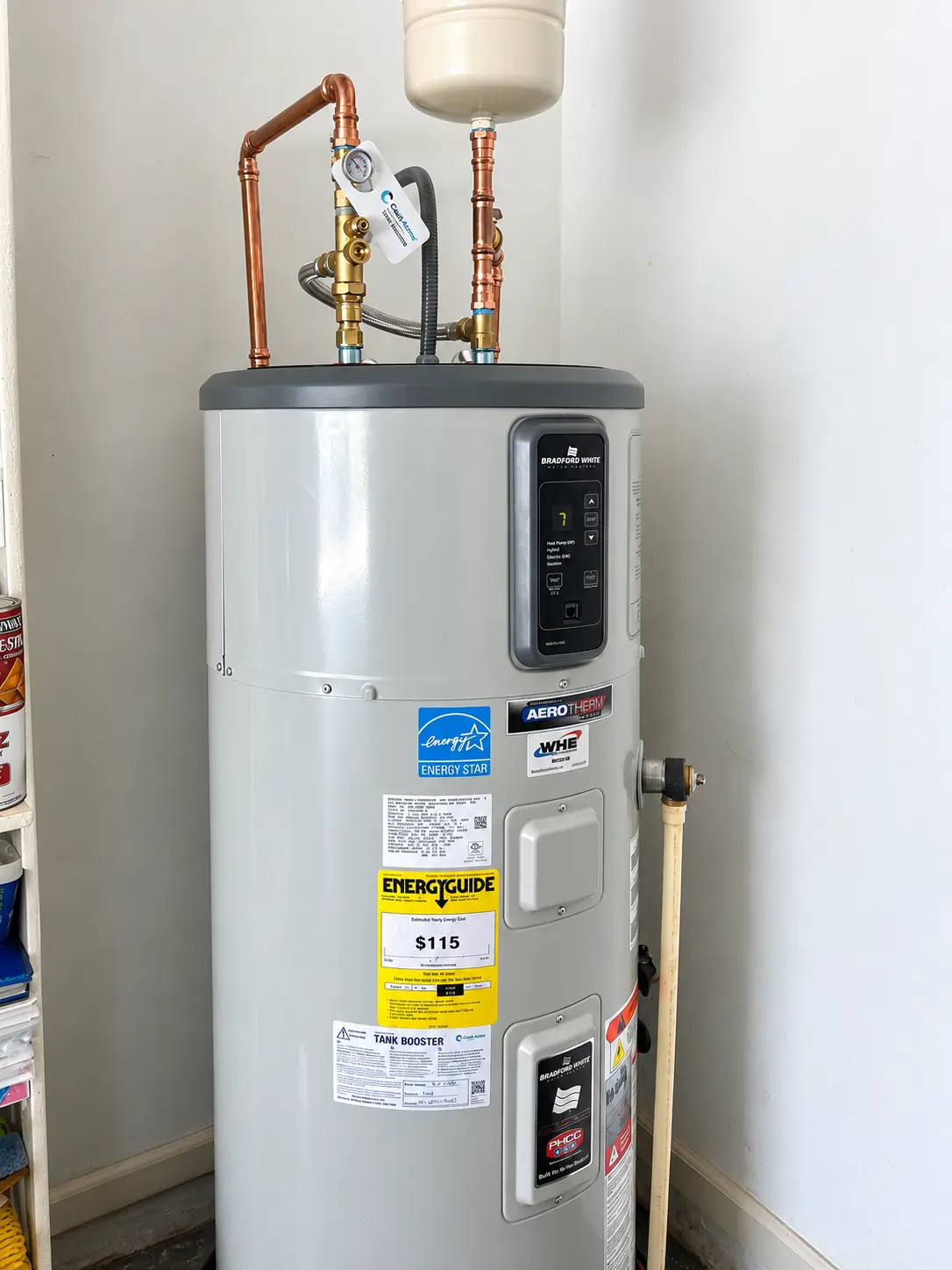
Yes—a thermostatic mixing-valve tank booster can increase usable hot-water delivery from a compatible, healthy storage tank. It allows appropriately hotter water to be stored, then mixes in cold water to control the temperature sent into the home’s hot-water piping.
The Cash Acme Tank Booster is one example. This type of booster does not enlarge the tank, add heating power or increase the burner’s or elements’ recovery capacity. It can be useful when a modest increase in usable delivery would solve the problem and a larger tank is difficult to fit.
Do not assume it will double your supply. The improvement depends on storage and inlet temperatures, flow and the equipment’s limits. “Booster” can also describe an electric inline heating device, which is a different product with its own power and compatibility requirements.
Do not simply turn up the thermostat to get more hot water. Higher temperatures increase scald risk. The CPSC recommends 120°F to reduce that risk, and even water at that temperature can cause burns with prolonged exposure. Any higher-storage-temperature design needs compatible controls, professional setup and temperature checks at the outlets; fixture-level scald protection may still be necessary.
Our water heater tank booster guide explains when this approach makes sense. For an older hot water heater, use the Water Heater Age Lookup and have its condition assessed before investing in an accessory.
Physical size matters, too
Check the water heater’s height and diameter, doorway access, pan, connections and required clearances. Two units with the same gallon capacity may fit differently. A hybrid needs space for airflow and service; gas equipment needs its specified venting and combustion-air arrangements.
For a Florida condo or townhome, also review association requirements, access and drainage before ordering. Replacing an attic hot water heater may be an opportunity to assess a garage location where practical. A larger tank should be quoted as a complete installation, including any related work.
Use our water heater size calculator and selector
Our WHE Water Heater Selector helps you explore a suggested size and matching catalog models using information about your home. Treat the results as a planning guide; WHE confirms demand, fuel, electrical capacity, venting and installation requirements before specifying equipment.
Have a photo of the existing model label ready, along with the number of occupants, bathroom use, shower habits and any large tub. If the current hot water heater runs out, tell us when it happens and whether that performance has changed.
Common sizing questions
Is a 50-gallon hot water heater enough for four people?
It can be, but the exact model’s delivery and your routine determine whether it is a good fit. Four long showers in quick succession or a large tub may justify greater storage, higher recovery or another properly designed solution.
Should I choose a 40- or 50-gallon tank?
Compare first-hour delivery, actual peak demand and dimensions. If the existing 40-gallon unit consistently met your needs when it worked properly, a larger replacement is not automatically necessary. Changes in household use can justify an upgrade.
Can a hot water heater be too large?
Unnecessary capacity can increase upfront cost, space requirements and standby losses, but technology matters. A larger, efficient hybrid can use less energy than a smaller resistance tank. Compare the complete installation and operating costs rather than assuming smaller always costs less.
Does a booster replace the need for a larger tank?
Sometimes. A mixing-valve booster can extend usable delivery from a sound, compatible tank. It does not fix failed heating components or provide unlimited recovery for sustained heavy demand. Have the existing system evaluated first.
Get help choosing the right size
Water Heating Experts helps homeowners in Palm Beach Gardens, Jupiter, Tequesta, Juno Beach, West Palm Beach and Wellington compare replacement and booster options.
Text installation and model-label photos to 561-602-9062, or call WHE. Tell us about the hot water you need, and we will evaluate the equipment and installation together.