
Water Heater Leaking at the Bottom: What to Do
A water heater leaking at the bottom may have a failed tank, but a puddle alone does not prove it. Water can also come from the drain valve, a fitting above the heater, the relief-valve discharge pipe or a condensate drain. A confirmed leak through the storage tank itself means replacement.
If your hot water heater is leaking from the bottom, address an active leak promptly. First make the area safe and stop the heater from operating; then have the source identified. Here is what to look for without taking the unit apart.
What to do first when your water heater is leaking
Smell gas or hear a suspected gas leak? Leave immediately. Do not operate switches, use a phone inside or try to troubleshoot the heater. From a safe location outside, call 911 and your gas supplier. Gas-utility safety guidance explains why leaving comes first.
Stay out of standing water near electrical equipment. Never touch a breaker with wet hands or while standing on a wet surface. If reaching the controls is unsafe, keep away and contact the utility or a qualified electrician. See ESFI’s electrical safety guidance.
- Turn off the heat, if you can do so safely. For an electric or hybrid hot water heater, switch off its dedicated breaker from a dry location. For gas equipment, follow the unit’s labeled shutdown instructions only if the controls are safely accessible and you know how to use them. Otherwise, get professional help.
- Close the cold-water inlet valve. After the heat is off, close the identified supply valve to the heater if it is safe to reach. Do not force a stuck valve. If needed, use the home’s main water shutoff only if you know its location and can operate it safely.
- Arrange service and protect the surrounding area. Keep people away from hot discharge water and electrical hazards. In a condo, notify building management if water could affect another unit. Take photos only from a safe position.
A. O. Smith’s leak guidance also calls for shutting off the energy supply and water before inspection. Closing the inlet does not empty the tank: stored water may continue escaping. Do not remove access panels, loosen fittings or try to drain a hot tank yourself.
Do not restart a leaking hot water heater while waiting for diagnosis. Wet electrical or gas controls require professional assessment. An electric tank must be completely full before power is restored; energizing exposed elements can damage them.
Why is water collecting at the bottom?
| Possible source | What may be visible | What it can mean |
|---|---|---|
| Drain valve near the bottom | Drips at the outlet, valve body or connection to the tank | A valve or connection repair may be possible. |
| Plumbing above the tank | Water trails down from an inlet, outlet or nearby pipe | Find the original leak before condemning the tank. |
| Relief-valve discharge pipe | Water comes from the pipe opening near the floor | Check pressure, temperature, expansion control and the valve. |
| Condensation or condensate drainage | Moisture associated with gas operation or a hybrid’s drain | Identify the source; recurring puddles need attention. |
| Internal storage tank | Leak confirmed through the tank wall or bottom | Replace the heater; a patch is not a lasting repair. |
The starting point is the source of the water, not just where it collects. A. O. Smith’s “Puddle on the Floor” bulletin identifies several possible sources, including valves, fittings, electric-element gaskets and the tank itself. Nearby plumbing or another appliance can also be responsible.
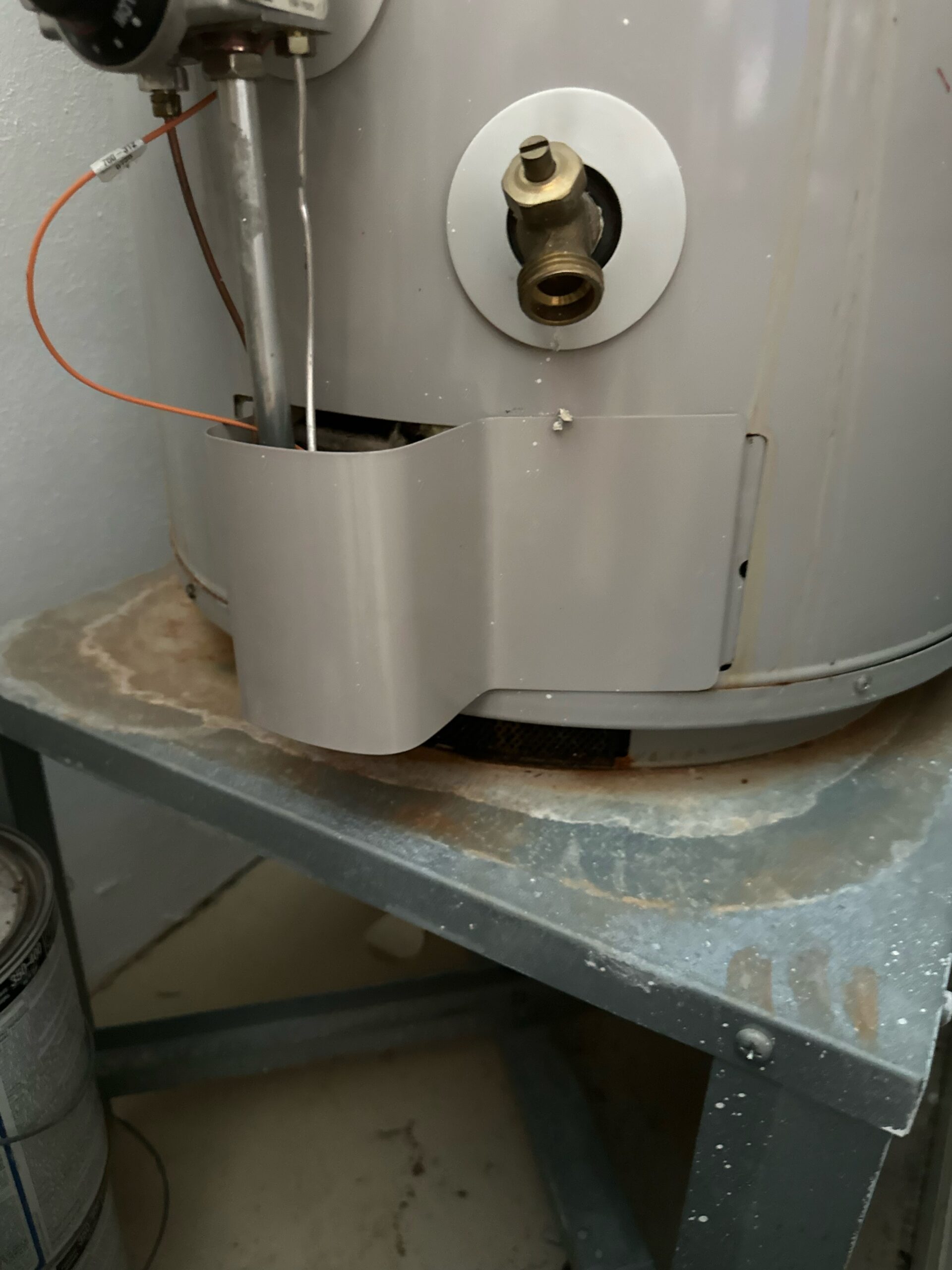
A leaking drain valve may be repairable
The drain valve sits low on many tank-style units, which makes a drip there look like a bottom-tank leak. Water may escape through the outlet, around the valve body or where it threads into the tank. A qualified plumber can determine whether replacing the valve or repairing its connection will resolve the problem.
A water heater does not automatically need replacement because its drain valve leaks. Avoid turning or tightening a corroded valve: disturbing it can make the situation worse. The condition of the surrounding tank also matters.
Check for water running down from above
A leak at a water connection higher up can travel down the outside of the jacket and collect underneath. On an electric water heater, an element gasket can also leak behind an access cover. Leave those covers in place and have the equipment inspected with power safely isolated.
Mineral deposits and rusty streaks help show where water has traveled, but they do not by themselves identify the failed part. A photo is useful for discussing the next step; an on-site inspection establishes the cause.
Water from the relief pipe needs a different diagnosis
The temperature and pressure relief valve, often called the T&P valve, is a safety device. Its discharge pipe can end low enough that released water appears to be a leak beneath the heater. High pressure, overheating, thermal expansion or a faulty valve can be involved.
Never cap, plug or block the relief valve or discharge pipe. Replacing the valve without checking the cause can leave the underlying problem unresolved. Our water heater expansion tank guide explains pressure increases in closed plumbing systems.
Could it be condensation instead of a tank leak?
A gas hot water heater can produce temporary condensation when cold tank water cools combustion surfaces. That is different from a hole in the tank. A. O. Smith’s condensation bulletin explains this distinction. Do not keep running a unit with an unexplained active leak just to see whether the puddle disappears.
A heat pump or hybrid hot water heater normally produces condensate that must drain away. A blocked or disconnected drain, or a condensate-pump problem, can leave water nearby. ENERGY STAR’s installation guidance calls for proper condensate drainage. A recurring puddle should not simply be dismissed as Florida humidity.
When does a bottom leak mean replacement?
When the storage tank itself is confirmed to be leaking, replace the water heater. The exterior jacket is not the vessel holding the water. Sealing that outer shell, applying epoxy or putting a larger pan underneath does not repair a corroded internal tank.
Flushing cannot close a hole in a tank. An anode rod helps protect a compatible tank against corrosion, but neither a new sacrificial rod nor a powered anode can restore steel that has already failed. Maintenance is prevention, not a repair for an existing tank leak.
For a repairable valve or fitting, consider the heater’s overall condition, age, repair cost and warranty before choosing a repair. Use our water heater age guide and warranty guide to gather information. Save the model and serial number, installation paperwork and photos before the old unit is removed.
If replacement is necessary, a leaking hot water heater is also an opportunity to check whether the current capacity still suits your household. Our sizing guide can help you prepare for that conversation.
Reduce the damage from a future leak
A properly installed drain pan and suitable drainage can help manage leakage where appropriate, but a pan is not a guarantee against flooding. Bradford White recommends professional evaluation of the installation location and pan requirements.
Leak alerts and automatic shutoff can add protection. WHE installs Moen Flo whole-home shutoff systems, which monitor the plumbing downstream of the device. They do not repair a leaking hot water heater or remove water already stored in its tank.
Frequently asked questions
Can I still shower if my hot water heater is leaking?
Do not keep operating a leaking unit simply because it still makes hot water. Follow the safe shutdown guidance above and have the source checked. A heater’s ability to heat does not establish that it is safe to use.
How long will a water heater last after it starts leaking?
There is no dependable countdown. A small leak can worsen, and the visible drip does not reveal the condition of the internal tank. Arrange prompt diagnosis instead of assuming you have days or weeks left.
Why is my hot water heater still leaking after I turn off the water?
Closing the inlet stops incoming water only if the valve closes properly. The tank still contains stored water, and nearby piping can hold water too. Continued flow needs professional assessment; do not assume a closed valve has made the area safe.
Help with a leaking water heater in Palm Beach County
Water Heating Experts provides water heater repair and maintenance and replacement and installation in Palm Beach County. We serve Palm Beach Gardens, Jupiter, West Palm Beach, Wellington and nearby service areas.
Call 561-602-9062 to discuss a leak and service availability. Once the area is safe, you can also text photos of your hot water heater, its label and where the water appears. Tell us whether the energy and water supplies have been shut off.
Questions and comments
Have a question about this article? Share it below. Comments are reviewed before publication. For service, text WHE at 561-602-9062.