
Water Heater Lifespan Without Flushing: What Matters?
You cannot reliably predict water heater lifespan without flushing from the flushing history alone. A tank that has never been flushed is not automatically at the end of its life, and an annually flushed hot water heater can still fail. Tank condition, corrosion protection, water chemistry and installation all matter.
In our experience at Water Heating Experts, routine flushing of conventional tank-style heaters has not appeared to make a large difference in their overall lifespan. That is a field observation, not a controlled comparison or a reason to ignore the manufacturer’s maintenance instructions. Tankless descaling is a different issue, and anode protection deserves attention on tank models.
How long can a water heater last without being flushed?
There is no dependable number of years to assign specifically to an unflushed tank. The U.S. Department of Energy’s Energy Saver guide gives a general storage-heater lifespan of about 10–15 years. That is background for replacement planning, not a prediction for a neglected heater or a guarantee for a maintained one.
If your water heater has reached 10 years without flushing, the useful next step is to evaluate its condition and maintenance needs. Check the manufacture date with our water heater age guide. For broader comparisons by heater type, see how long a water heater lasts.
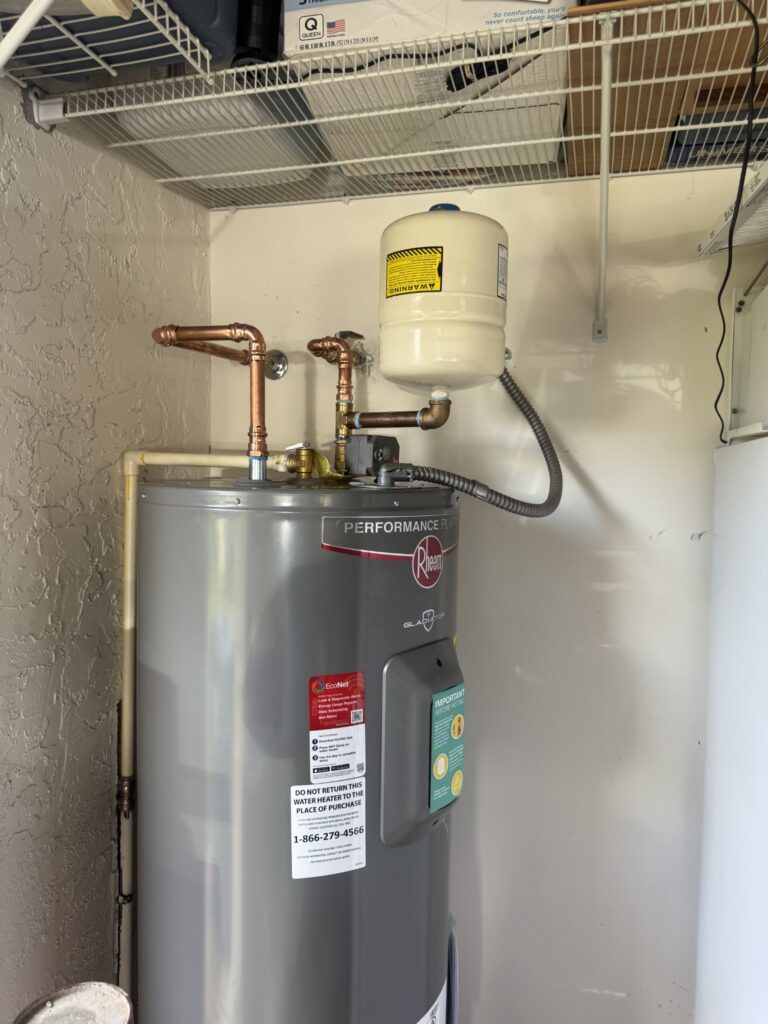
What flushing a tank water heater actually does
Flushing helps carry sediment out through the drain. Rheem’s flushing bulletin explains that accumulated deposits can interfere with heat transfer, contribute to noise and clog the drain valve. It also notes that flushing does not remove every trace of sediment.
Those are valid maintenance reasons. However, draining a hot water heater does not rebuild its lining, replace a depleted anode or repair metal already lost to corrosion. We would not promise that an annual flush will add a specific number of years to a tank’s life.
A. O. Smith recommends at least annual flushing for most tank models, with more frequent service potentially needed in hard water. Other manufacturers and models specify different intervals. Use your own manual and water conditions to set the schedule.
Flushing, anode protection and tankless descaling do different jobs
| Maintenance item | Main purpose | Key limitation |
|---|---|---|
| Tank flushing | Remove sediment that can collect inside a storage tank. | Does not renew corrosion protection or repair a leaking tank. |
| Anode inspection or upgrade | Help protect a compatible steel tank against internal corrosion. | Does not remove scale or eliminate other maintenance. |
| Tankless descaling | Remove mineral deposits from the heater’s water passages. | Requires a model-specific procedure and service interval. |
The anode rod’s role in hot water heater lifespan
Most conventional glass-lined steel tanks use a sacrificial anode rod. The rod corrodes preferentially to help protect exposed steel inside the tank. As it is consumed, it needs inspection and eventual replacement. A tank can still make hot water even when its anode protection has deteriorated.
Rheem’s anode guidance explains why water chemistry affects this process and why softened water can consume a sacrificial rod more quickly. Anode inspection belongs in the maintenance plan for an applicable hot water heater, with the timing and replacement criteria taken from its manual.
Do not remove a required anode permanently to deal with an odor. Doing so removes corrosion protection and can affect tank warranty coverage. Polymer tanks and other specialized designs have different requirements; an anode recommendation is not universal to every type of water heater.
Why WHE recommends considering an electronic anode rod
For a compatible tank-style hot water heater in sound condition, WHE recommends considering an electronic, or powered, anode rod as a corrosion-protection upgrade. It is especially worth discussing when a sacrificial rod depletes quickly or access makes repeated replacement difficult.
A powered system supplies a small electrical current to help protect the tank, rather than relying on a sacrificial rod being gradually consumed. For example, A. O. Smith offers powered anode systems; its residential system instructions explain the power requirement, alerts and model restrictions. This technology addresses corrosion protection directly.
Have the installer confirm these points before choosing a kit:
- Compatibility: Match the heater model, capacity and anode connection. A dedicated anode opening and an anode combined with the hot-water outlet may require different kits.
- Power and monitoring: Keep the system powered as directed and check its status indicator. An electronic anode cannot provide powered protection when its required power supply is off.
- Tank condition: An upgrade cannot restore a tank that has already corroded through.
- Warranty: Confirm the heater manufacturer’s requirements and the kit’s terms before installation. An anode product warranty is separate from the hot water heater’s warranty.
A powered anode does not make the entire heater maintenance-free or guarantee another 10 or 20 years. Sediment service, leak checks and the other tasks in the heater’s manual still apply.
Why tankless water heater flushing is different
For a tankless hot water heater, “flushing” usually means circulating an approved descaling solution through the unit. Mineral deposits in its water passages can affect performance and service life. This is different from draining loose sediment out of a storage tank.
Rinnai’s maintenance guidance calls for periodic inlet-filter cleaning and flushing to control scale, with timing based on water quality. Its flushing guidance recommends at least annual service. Follow the exact model’s requirements; hard water or heavy use may call for a different schedule.
Our experience with tank flushing should not be taken as a reason to skip tankless descaling. If you are comparing gas tankless systems, our condensing versus non-condensing guide explains the equipment differences. Both types still need a maintenance plan.
What if your hot water heater has never been flushed?
Have an older or neglected heater assessed before starting a first-time flush. A technician can check the drain, visible corrosion, leaks, anode serviceability and the model’s instructions. Age alone does not establish that flushing is unsafe, but maintenance cannot reverse an already failing tank.
In Florida, ask about the actual water supplied to your home, including any well treatment or softener. Do not assume every Palm Beach County home has the same water conditions. Also distinguish a repairable valve or fitting leak from a leaking tank shell, which generally requires replacement.
A flush or anode upgrade also does not reset the equipment’s age for an insurer or association. If that is driving the decision, read our guide to insurance and HOA replacement requirements and check your written notice.
Frequently asked questions
Does never flushing a hot water heater automatically mean it needs replacement?
No. Missing maintenance is a reason to assess the unit, not proof of a failed tank. Base the decision on its condition, age, repair needs and any applicable replacement deadline.
Will a powered anode rod remove existing sediment?
Its main job is corrosion protection. Do not use an electronic anode as a substitute for the sediment-removal or descaling procedures specified for your heater.
Is it worth upgrading the anode in a very old tank?
That depends on the tank’s condition, installation access, remaining warranty and the installed cost of the upgrade. WHE recommends assessing those factors first. Adding a powered rod to a leaking or badly deteriorated tank is not a repair.
Help with an older water heater in Palm Beach County
Water Heating Experts helps local homeowners evaluate maintenance, anode options and replacement needs. Text 561-602-9062 with the model number, approximate age and a photo of your hot water heater. Tell us whether it has been flushed and whether your home uses a softener or well water.
If replacement makes more sense, use our water heater selector to compare options or request a free installation estimate.
Questions and comments
Have a question about this article? Share it below. Comments are reviewed before publication. For service, text WHE at 561-602-9062.