
FPL on Tankless vs. Tank and Heat Pump Water Heaters
Choosing between an electric tankless, conventional electric tank or hybrid heat-pump water heater? FPL’s public water-heating guidance highlights heat pumps as an efficient option. For a Florida home, the practical decision also depends on electrical capacity, available space and peak hot-water demand. This is WHE’s independent explanation of FPL’s advice and the installation choices it raises.
What does FPL currently say about water heaters?
FPL’s water heater advice page explains that heat-pump water heaters move heat from surrounding air into water, and describes them as two to three times as energy-efficient as conventional units. It also encourages reducing hot-water use, including washing laundry in cold water when appropriate. That efficiency comparison is not a promise that every household’s total electric bill will fall by the same percentage.
An older version of this WHE article reproduced a question-and-answer attributed to an FPL expert. Its dollar estimates and broad installation claims should not be treated as current quotes or guarantees. The comparison below is WHE’s explanation, supported by current utility and manufacturer sources.
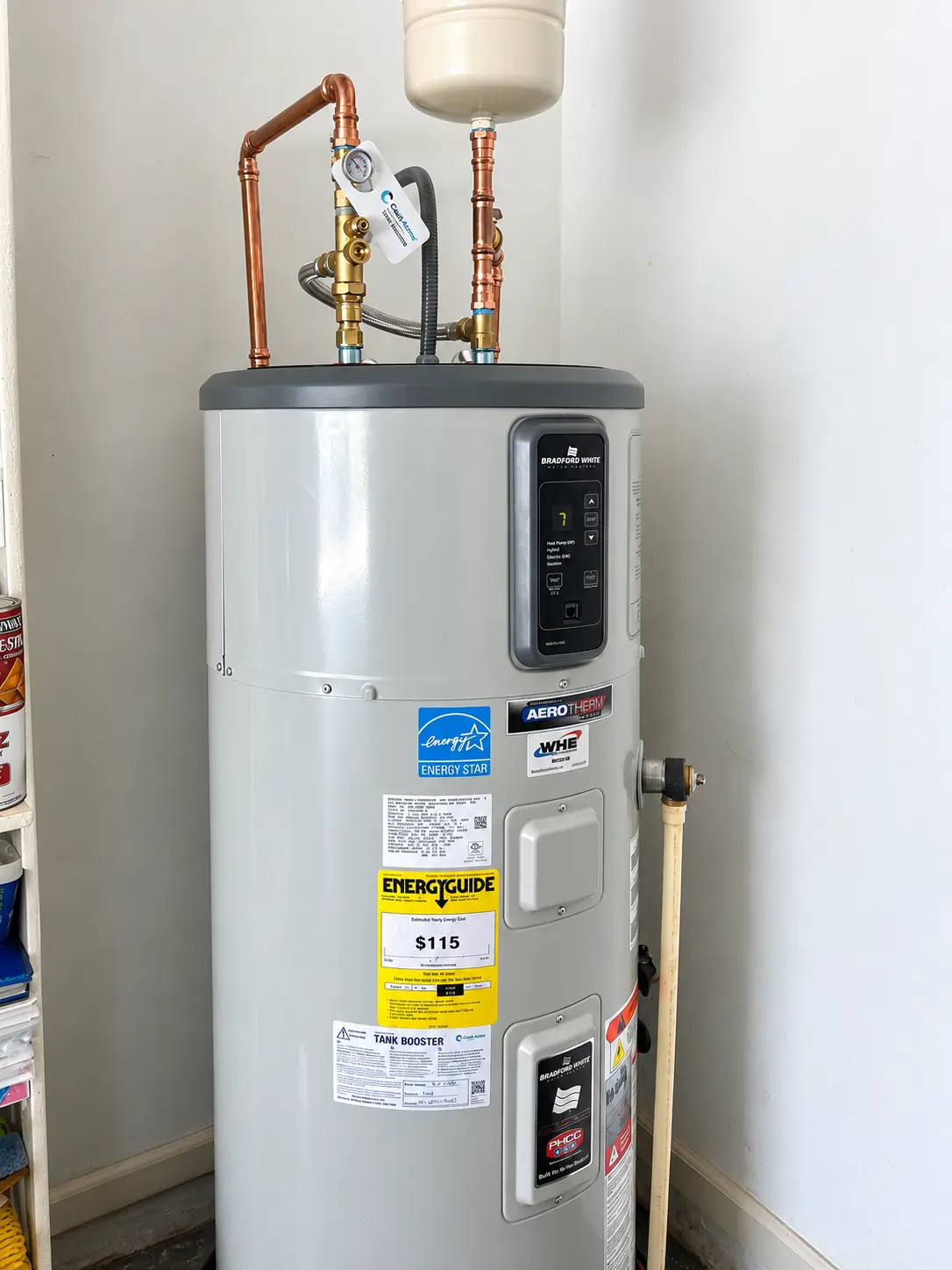
Electric tankless vs. tank vs. heat pump
| Option | What it offers | What to check first |
|---|---|---|
| Conventional electric tank | Stored hot water and familiar resistance heating; often a straightforward replacement. | Tank capacity, first-hour delivery, dimensions, existing circuit and total installed price. |
| Electric tankless | Compact equipment that heats flowing water without a large storage tank. | Simultaneous flow, required temperature rise, electrical load and circuit/service upgrade costs. |
| Hybrid heat-pump tank | Stores hot water while using surrounding heat to reduce electricity use in suitable conditions. | Airflow, height, sound, condensate drainage, electrical requirements and recovery in the selected mode. |
This table compares electric systems. Gas tankless equipment has different fuel-supply, venting and installation considerations. For a broader comparison, see our hybrid versus tankless guide.
Why electric tankless does not automatically mean a much lower FPL bill
Eliminating a storage tank avoids its standby heat loss, but an electric tankless unit still uses resistance elements to heat the water you draw. Its compact size does not establish its annual operating cost. The result depends on the old tank, household use, incoming water temperature and the specific replacement.
Electrical demand can be substantial. For example, the manufacturer’s Tempra Trend/Plus technical specifications list the Tempra 24 at 24 kW and a total 100-amp draw at 240 volts. The document recommends a minimum 150-amp main service, depending on the site’s total load. That is an illustration of why an electrician must evaluate the entire home—not a universal service-size rule for all tankless heaters.
A tankless unit also has a flow limit at a given temperature rise. Several fixtures running together can exceed its capacity. Specify the actual shower and fixture demand before choosing equipment; continuous operation does not mean unlimited simultaneous hot-water flow.
Why a heat-pump water heater may suit a Florida garage
A heat-pump water heater transfers heat rather than relying only on resistance elements. A suitable garage can provide useful surrounding warmth, but installation must meet the exact model’s air-volume, temperature and clearance requirements. Condensate needs a proper drainage route, and operating sound should be considered near bedrooms or living areas.
Many hybrids include electric elements to support recovery. Frequent use of those elements can reduce the efficiency advantage. Size the tank and select the operating mode for the household’s busiest hot-water period. ENERGY STAR’s buying guidance covers location, capacity and installation planning.
Do not assume “no electrical upgrades” or “the same footprint.” Some replacements can use a suitable existing circuit, while others require changes. Height, service access and airflow matter as well as floor space. For the work involved, see our real WHE hybrid installation article.
When a conventional electric tank still makes sense
A conventional tank may be a practical choice when upfront cost, location or installation constraints outweigh the expected operating savings of another system. We compare the complete job—not just the heater’s purchase price—and check peak delivery and access for future service.
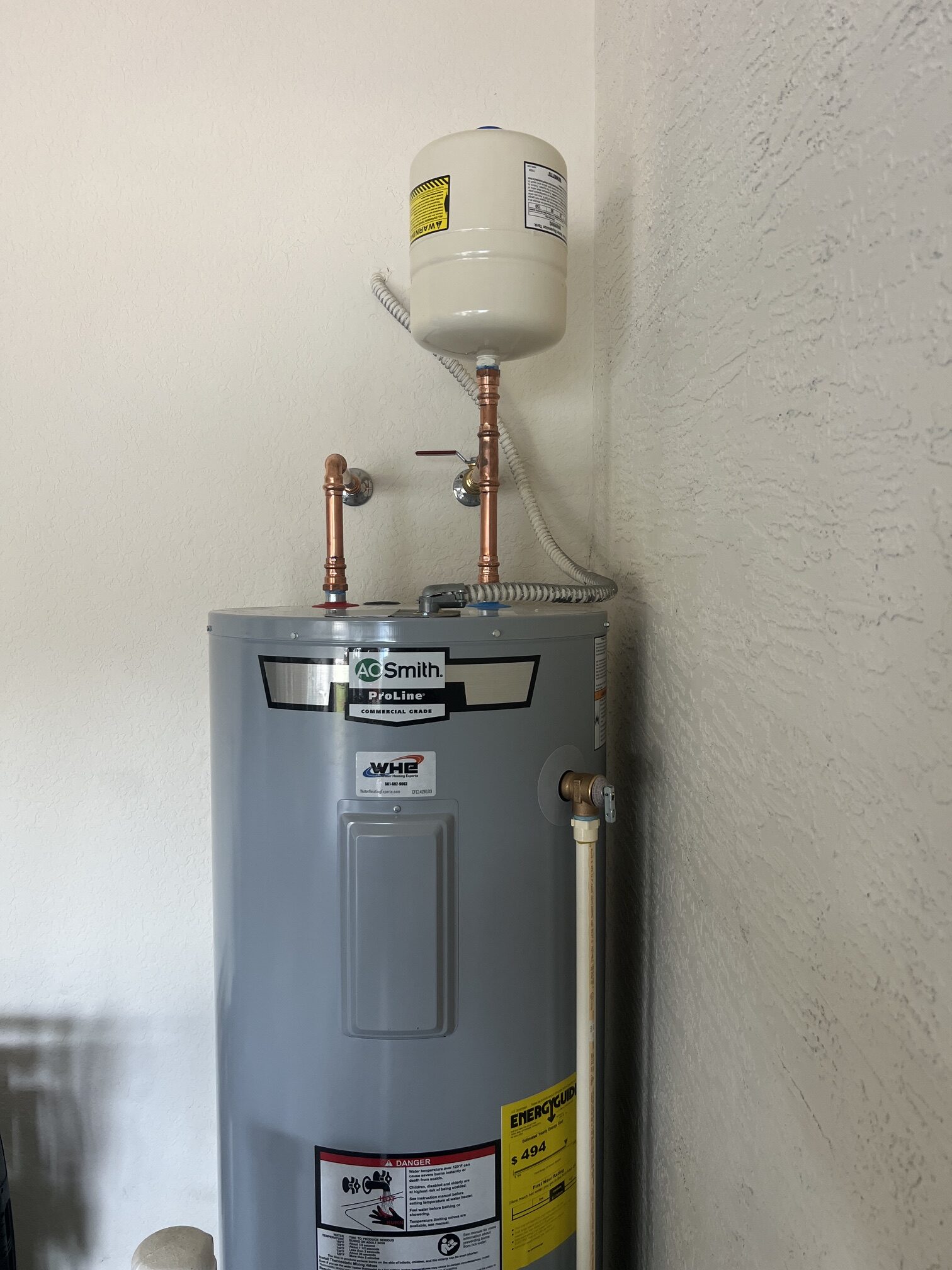
For larger households, compare 80-gallon replacement options. A smaller hybrid should not automatically be assumed to match an older large tank’s peak delivery.
How to estimate savings without relying on old dollar claims
Start with a realistic estimate of annual electricity use for each option under comparable conditions. Multiply the expected reduction in kilowatt-hours by the applicable per-kWh electricity charges. Fixed customer charges generally remain, so dividing the entire bill by usage can overstate the savings from reduced consumption.
Illustrative example: saving 1,500 kWh per year at an assumed $0.15 per kWh would save $225 annually. These are example inputs, not a current FPL rate or a prediction for your home. Then compare that estimate with the additional installed cost, maintenance and expected ownership period.
We no longer present the old article’s $20–$30 tankless saving or $175 heat-pump saving as current household estimates. Nor should a generic efficiency ratio be treated as a guaranteed payback period.
FPL rebates and On Call: check the correct program
FPL’s advertised $200 heat-pump rebate is for qualifying home heating-and-cooling equipment with indoor and outdoor units. It should not be described as a rebate for a domestic heat-pump water heater. Confirm any proposed water-heater incentive directly for your account, location and exact equipment before including it in an estimate.
If your existing tank is on FPL On Call, discuss replacement with FPL before work begins. Its published On Call terms list conventional water heaters as eligible and exclude tankless, heat-pump and certain other water-heater types. Replacing the tank can therefore affect that appliance’s participation and bill credit. The utility control must be handled through the appropriate program process.
Federal credits are separate. The former Section 25C credit does not apply to equipment placed in service after December 31, 2025; see our updated heat-pump tax-credit guide.
Frequently asked questions
Does FPL recommend a heat-pump water heater?
FPL’s current public water-heater article highlights heat-pump efficiency. Selecting a suitable model still requires checking your home’s space, hot-water needs and installation conditions.
Is electric tankless always cheaper to run than an electric tank?
No universal dollar saving applies. Compare the actual models and usage, and include any electrical upgrades in the installed-cost comparison.
Can a hybrid use my existing water-heater circuit?
Possibly, if the circuit meets that model’s requirements and is suitable for continued use. Have the electrical supply verified rather than assuming every hybrid is a direct swap.
Does FPL’s $200 heat-pump rebate cover water heaters?
The cited FPL program is for qualifying heating-and-cooling systems, not domestic water heaters. Confirm any other incentive directly with its administrator.
Can I keep my FPL On Call water-heater credit after switching to a hybrid?
Do not assume it will transfer. The published terms exclude heat-pump water heaters; contact FPL about the replacement and any change to participation.
Will a tankless heater provide unlimited hot water for every fixture?
It can continue heating while water flows within its operating capacity. Available flow depends on the model and required temperature rise, so simultaneous demand must be sized.
What does WHE need to compare the options?
Send the model and serial label, a full photo of the existing heater and its surrounding space, and a description of your busiest hot-water use. We can then identify the installation questions that need an on-site review.
Compare water heater options with WHE
Water Heating Experts LLC is family-owned and master-plumber-owned, Florida Certified Plumbing Contractor CFC1426133. We help homeowners in Palm Beach Gardens, Jupiter, Tequesta, Juno Beach and nearby northern Palm Beach County compare practical water-heater replacements.
FPL guidance and manufacturer specifications reviewed October 15, 2026. Installation photos show separate WHE projects. Program eligibility, equipment availability and savings must be evaluated for the individual home.
Questions and comments
Have a question about this article? Share it below. Comments are reviewed before publication. For service, text WHE at 561-602-9062.
I bought an 80 gallon hybrid and loved it. I never crunched the numbers but I would guarantee I saved money. The hybrid is the way to go if you know you will be in your home long-term. Another benefit is it blows out the cool air and made my garage comfortable.
Does FPL offer rebates for converting from a conventional electric water heater to a heat pump water heater?
Thank you!
That’s what I want to know too.
PLEASE CONTACT ME As soon as possible!
GENTLEMAN!
I AM TRULY INTERESTED IN A HYBRID WATER HEATER ! MY ELECTRIC BILL HAS DOBLE AND I AM AFRAID ITIS BECAUSE OF THE OLD WATER HEATER IN MY CONDO! I NEED YOUR HELP PLEASE ???!
MARÍA DINÁ